
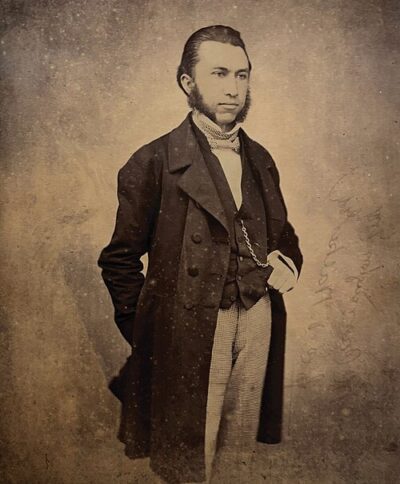
Richard Christopher Carrington
Richard Christopher Carrington was a British astronomer. Born May 26, 1826, in Chelsea. Died November 27, 1875, in Churt. Educated at Trinity College. Awards include Fellow of the Royal Society, Gold Medal of the Royal Astronomical Society and Lalande Prize.
Facts
13 facts · 2 confirmed by two sources · 3 cited · 8 from one source
Where this comes from
Papalocal keeps its own record. It started from these sources; what each one said is kept here as it was copied, so a change on their side never changes this page by itself. Tap one to read its version.
What Wikidata says · copied November 16, 2026 · revision 2558223776
- Described as
- British astronomer (1826-1875)
- Born
- May 26, 1826 · 5 references
- Died
- November 27, 1875 · 5 references
- Born in
- Chelsea · 1 reference
- Died in
- Churt · 1 reference
- Buried in
- West Norwood Cemetery
- Citizen of
- United Kingdom of Great Britain and Ireland
- Occupation
- astronomer · 1 reference
- Education
- Trinity College
- Member of
- Royal Society of London
- Awards
- Fellow of the Royal Society; Gold Medal of the Royal Astronomical Society (1859); Lalande Prize (1864)
- Field
- astronomy
- Wikipedias with a page
- 28
Wikidata item Q453690 (wikidata.org/wiki/Q453690), public domain (CC0). Copied November 16, 2026.
What Wikipedia says · copied November 16, 2026 · revision 1371988764
Richard Christopher Carrington (26 May 1826 – 27 November 1875) was an English astronomer whose 1859 astronomical observations demonstrated the existence of solar flares as well as suggesting their electrical influence upon the Earth and its aurorae; and whose 1863 records of sunspot observations revealed the differential rotation of the Sun.
- Born, in its opening lines
- May 26, 1826
- Died, in its opening lines
- November 27, 1875
From the Wikipedia article “Richard Christopher Carrington” (en.wikipedia.org/wiki/Richard_Christopher_Carrington), by its contributors, under CC BY-SA 4.0 (creativecommons.org/licenses/by-sa/4.0/). Copied November 16, 2026; not changed.
Confirmed Two sources agree. Cited One source, and it names where it got it. One source One source, without a reference of its own. Sources disagree The sources disagree. We show the best-supported value and keep theirs below.
