
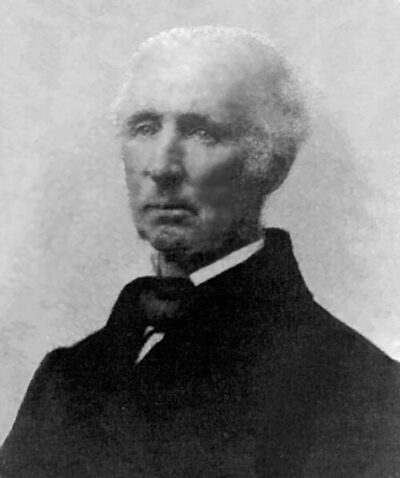
Richard Hawes
Richard Hawes was an United States Representative; Second Confederate governor of Kentucky. Born February 6, 1797, in Bowling Green. Died May 25, 1877, in Paris. Positions held include United States representative (1837–1841) and member of the Kentucky House of Representatives. Educated at Transylvania University.
Facts
14 facts · 2 confirmed by two sources · 1 cited · 11 from one source
Where this comes from
Papalocal keeps its own record. It started from these sources; what each one said is kept here as it was copied, so a change on their side never changes this page by itself. Tap one to read its version.
What Wikidata says · copied November 18, 2026 · revision 2511961627
- Described as
- United States Representative; Second Confederate governor of Kentucky (1797-1877)
- Other names
- Richard Hawes, 2nd Confederate Governor of Kentucky
- Born
- February 6, 1797 · 2 references
- Died
- May 25, 1877 · 2 references
- Born in
- Bowling Green
- Died in
- Paris
- Citizen of
- United States
- Occupation
- politician; lawyer; judge
- Positions held
- United States representative (1837–1841); member of the Kentucky House of Representatives
- Political party
- Whig Party; Democratic Party
- Education
- Transylvania University
- Children
- Smith Nicholas Hawes · 1 reference
- Wikipedias with a page
- 16
Wikidata item Q1447602 (wikidata.org/wiki/Q1447602), public domain (CC0). Copied November 18, 2026.
What Wikipedia says · copied November 18, 2026 · revision 1378296586
Richard Hawes Jr. (February 6, 1797 – May 25, 1877) was a United States representative from Kentucky and the second Confederate governor of Kentucky. He was part of the politically influential Hawes family. His brother, uncle, and cousin also served as U.S. Representatives, and his grandson Harry B. Hawes was a member of the United States Senate. He was a slaveholder.
Hawes began his political career as an ardent Whig and was a close friend of the party's founder, Henry Clay. When the party declined and dissolved in the 1850s, Hawes became a Democrat, and his relationship with Clay cooled.
At the outbreak of the Civil War, Hawes was a supporter of Kentucky's doctrine of armed neutrality. When the Commonwealth's neutrality was breached in September 1861, Hawes fled to Virginia and enlisted as a brigade commissary under Confederate general Humphrey Marshall. When Kentucky's Confederate government was formed in Russellville, Hawes was offered the position of state auditor, but declined. Months later, he was selected to be Confederate governor of the Commonwealth following George W. Johnson's death at the Battle of Shiloh.
Hawes and the Confederate government traveled with Braxton Bragg's Army of Tennessee, and when Bragg invaded Kentucky in October 1862, he captured Frankfort and held an inauguration ceremony for Hawes. The ceremony was interrupted, however, by forces under Union general Don Carlos Buell, and the Confederates were driven from the Commonwealth following the Battle of Perryville. Hawes relocated to Virginia, where he conducted a Confederate government in exile for Kentucky and continued to lobby President Jefferson Davis to attempt another invasion of the state.
At the end of the war, the Confederate government of Kentucky in exile ceased to exist, and Hawes returned to his home in Paris, Kentucky. He swore an oath of allegiance to the Union, and was allowed to return to his law practice. He was elected county judge of Bourbon County, a post he held until his death in 1877.
- Born, in its opening lines
- February 6, 1797
- Died, in its opening lines
- May 25, 1877
From the Wikipedia article “Richard Hawes” (en.wikipedia.org/wiki/Richard_Hawes), by its contributors, under CC BY-SA 4.0 (creativecommons.org/licenses/by-sa/4.0/). Copied November 18, 2026; not changed.
Confirmed Two sources agree. Cited One source, and it names where it got it. One source One source, without a reference of its own. Sources disagree The sources disagree. We show the best-supported value and keep theirs below.
