
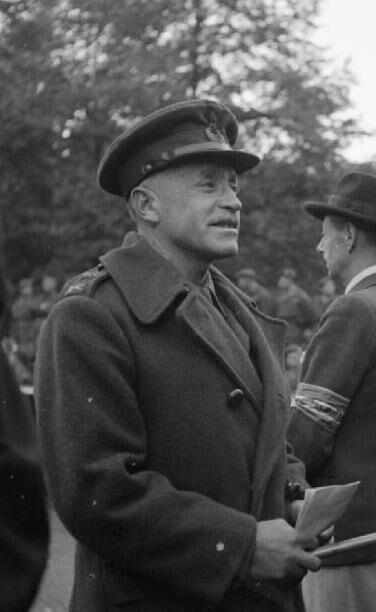
Richard O'Connor
Richard O'Connor was a British Army general. Born August 21, 1889, in Srinagar. Died June 17, 1981, in London. Positions held include Lord Lieutenant of Ross and Cromarty (1955–1964). Educated at Royal Military College, Sandhurst and Royal Military Academy Sandhurst. Awards include Military Cross, Knight Grand Cross of the Order of the Bath and Distinguished Service Order.
Facts
16 facts · 2 confirmed by two sources · 0 cited · 14 from one source
Where this comes from
Papalocal keeps its own record. It started from these sources; what each one said is kept here as it was copied, so a change on their side never changes this page by itself. Tap one to read its version.
What Wikidata says · copied November 18, 2026 · revision 2564006512
- Described as
- British Army general (1889-1981)
- Other names
- Sir Richard Nugent O'Connor
- Born
- August 21, 1889 · 1 reference
- Died
- June 17, 1981 · 1 reference
- Born in
- Srinagar
- Died in
- London
- Citizen of
- United Kingdom
- Occupation
- military personnel
- Positions held
- Lord Lieutenant of Ross and Cromarty (1955–1964)
- Education
- Royal Military College, Sandhurst; Royal Military Academy Sandhurst · 1 reference; Wellington College
- Awards
- Military Cross; Knight Grand Cross of the Order of the Bath (1947); Distinguished Service Order · 1 reference; Knight Companion of the Order of the Thistle (1971)
- Military branch
- British Army
- Military rank
- army general
- Wikipedias with a page
- 24
Wikidata item Q352630 (wikidata.org/wiki/Q352630), public domain (CC0). Copied November 18, 2026.
What Wikipedia says · copied November 18, 2026 · revision 1384871355
General Sir Richard Nugent O'Connor (21 August 1889 – 17 June 1981) was a senior British Army officer who fought in both the First and Second World Wars, and commanded the Western Desert Force in the early years of the Second World War. He was the field commander for Operation Compass, in which his forces destroyed a much larger Italian army – a victory which nearly drove the Axis from Africa, and in turn, led Adolf Hitler to send the Afrika Korps under Erwin Rommel to try to reverse the situation. O'Connor was captured by a German patrol on 6 April 1941 and spent over two years in an Italian prisoner of war camp. He eventually escaped after the fall of Mussolini in the autumn of 1943. In 1944 he commanded VIII Corps in the Battle of Normandy and later during Operation Market Garden. In 1945 he was General Officer in Command of the Eastern Command in India and then, in the closing days of British rule in the subcontinent, he headed Northern Command. His final job in the army was Adjutant-General to the Forces in London, in charge of the British Army's administration, personnel and organisation.
In honour of his war service, O'Connor was recognised with the highest level of knighthood in two different orders of chivalry. He was appointed a Companion of the Distinguished Service Order (with Bar); awarded the Military Cross, the French Croix de Guerre and the Legion of Honour; and served as aide-de-camp to King George VI. He was also mentioned in despatches nine times for actions in the First World War, once in Palestine in 1939 and three times in the Second World War.
- Born, in its opening lines
- August 21, 1889
- Died, in its opening lines
- June 17, 1981
From the Wikipedia article “Richard O'Connor” (en.wikipedia.org/wiki/Richard_O'Connor), by its contributors, under CC BY-SA 4.0 (creativecommons.org/licenses/by-sa/4.0/). Copied November 18, 2026; not changed.
Confirmed Two sources agree. Cited One source, and it names where it got it. One source One source, without a reference of its own. Sources disagree The sources disagree. We show the best-supported value and keep theirs below.
