
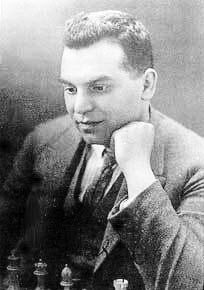
Richard Réti
Richard Réti was a Czechoslovakian chess player. Born May 28, 1889, in Pezinok. Died June 6, 1929, in Prague. Known for Réti endgame study. Educated at University of Vienna.
Facts
17 facts · 2 confirmed by two sources · 7 cited · 8 from one source
Where this comes from
Papalocal keeps its own record. It started from these sources; what each one said is kept here as it was copied, so a change on their side never changes this page by itself. Tap one to read its version.
What Wikidata says · copied November 16, 2026 · revision 2559575537
- Described as
- Czechoslovakian chess player (1889–1929)
- Other names
- Richard Reti
- Born
- May 28, 1889 · 5 references
- Died
- June 6, 1929 · 5 references
- Born in
- Pezinok · 1 reference
- Died in
- Prague · 2 references
- Buried in
- Old Jewish Cemetery · 1 reference
- Cause of death
- scarlet fever · 1 reference
- Citizen of
- Czechoslovakia; Cisleithania · 1 reference
- Occupation
- chess player · 1 reference; chess composer; writer · 1 reference; chess theoretician; merchant · 1 reference
- Education
- University of Vienna (1907–1912) · 1 reference
- Sport
- chess
- Known for
- Réti endgame study
- Siblings
- Rudolph Reti
- Wikipedias with a page
- 41
Wikidata item Q312985 (wikidata.org/wiki/Q312985), public domain (CC0). Copied November 16, 2026.
What Wikipedia says · copied November 16, 2026 · revision 1377715550
Richard Réti (28 May 1889 – 6 June 1929) was an Austro-Hungarian and later Czechoslovak chess player, chess author and composer of endgame studies.
He was one of the principal proponents of hypermodernism in chess. With the exception of Nimzowitsch's book My System, he is considered to be the movement's foremost literary contributor.
- Born, in its opening lines
- May 28, 1889
- Died, in its opening lines
- June 6, 1929
From the Wikipedia article “Richard Réti” (en.wikipedia.org/wiki/Richard_Réti), by its contributors, under CC BY-SA 4.0 (creativecommons.org/licenses/by-sa/4.0/). Copied November 16, 2026; not changed.
Confirmed Two sources agree. Cited One source, and it names where it got it. One source One source, without a reference of its own. Sources disagree The sources disagree. We show the best-supported value and keep theirs below.
