
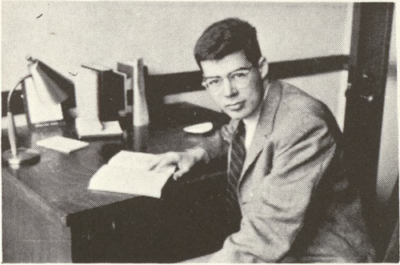
Richard Rorty
Richard Rorty was an American philosopher. Born October 4, 1931, in New York City. Died June 8, 2007, in Palo Alto. Educated at University of Chicago and Yale University. Awards include Guggenheim Fellowship, MacArthur Fellows Program and Meister Eckhart Prize.
Facts
29 facts · 2 confirmed by two sources · 6 cited · 21 from one source
Where this comes from
Papalocal keeps its own record. It started from these sources; what each one said is kept here as it was copied, so a change on their side never changes this page by itself. Tap one to read its version.
What Wikidata says · copied November 13, 2026 · revision 2565324783
- Described as
- American philosopher (1931–2007)
- Other names
- Richard McKay Rorty, Richard M. Rorty
- Born
- October 4, 1931 · 9 references
- Died
- June 8, 2007 · 9 references
- Born in
- New York City · 2 references
- Died in
- Palo Alto · 1 reference
- Cause of death
- pancreatic cancer
- Citizen of
- United States
- Occupation
- philosopher · 3 references; pedagogue; university teacher; writer
- Worked for
- Princeton University; Wellesley College; Stanford University
- Education
- University of Chicago; Yale University · 1 reference
- Member of
- American Academy of Arts and Sciences; American Philosophical Society (2005–)
- Awards
- Guggenheim Fellowship (1973) · 1 reference; MacArthur Fellows Program; Meister Eckhart Prize (2001); Wilbur Cross Medal (2005) · 1 reference; honorary doctorate of the Vrije Universiteit Brussel (2001) · 1 reference; honorary doctor of Babeș-Bolyai University; honorary doctor of Paris 8 University (1997) · 2 references
- Field
- philosophy; pragmatism
- Father
- James Rorty
- Mother
- Winifred Rauschenbusch
- Religion
- atheism
- Wikipedias with a page
- 53
Wikidata item Q215258 (wikidata.org/wiki/Q215258), public domain (CC0). Copied November 13, 2026.
What Wikipedia says · copied November 13, 2026 · revision 1384887145
Richard McKay Rorty (October 4, 1931 – June 8, 2007) was an American philosopher, historian of ideas, and public intellectual. Educated at the University of Chicago and Yale University, Rorty's academic career included appointments as the Stuart Professor of Philosophy at Princeton University, the Kenan Professor of Humanities at the University of Virginia, and a professor of comparative literature at Stanford University. Among his most influential books are Philosophy and the Mirror of Nature (1979), Consequences of Pragmatism (1982), and Contingency, Irony, and Solidarity (1989).
Rorty rejected the long-held idea that correct internal representations of objects in the outside world are a necessary prerequisite for knowledge. Rorty argued instead that knowledge is an internal and linguistic affair; knowledge relates only to our own language. He claimed that language is made up of vocabularies that are temporary and historical, concluding that "since vocabularies are made by human beings, so are truths". The acceptance of the preceding arguments leads to what Rorty calls "ironism"; a state of mind where people are completely aware that their knowledge is dependent on their time and place in history, and are therefore somewhat detached from their own beliefs. However, Rorty also argued that "a belief can still regulate action, can still be thought worth dying for, among people who are quite aware that this belief is caused by nothing deeper than contingent historical circumstance".
- Born, in its opening lines
- October 4, 1931
- Died, in its opening lines
- June 8, 2007
From the Wikipedia article “Richard Rorty” (en.wikipedia.org/wiki/Richard_Rorty), by its contributors, under CC BY-SA 4.0 (creativecommons.org/licenses/by-sa/4.0/). Copied November 13, 2026; not changed.
Confirmed Two sources agree. Cited One source, and it names where it got it. One source One source, without a reference of its own. Sources disagree The sources disagree. We show the best-supported value and keep theirs below.
