
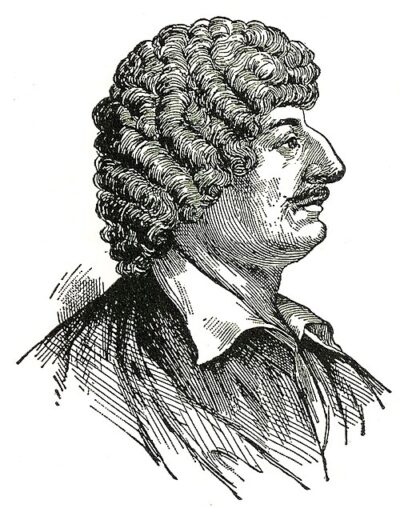
Robert Herrick
Robert Herrick was an English poet and cleric. Born August 24, 1591, in London. Died October 12, 1674, in Dean Prior. Known for Hesperides. Educated at Trinity Hall and Westminster School.
Facts
13 facts · 1 confirmed by two sources · 4 cited · 7 from one source · 1 where the sources disagree
What’s different
- Died: we show October 12, 1674 (Sources disagree). Wikipedia says October 15, 1674
Where this comes from
Papalocal keeps its own record. It started from these sources; what each one said is kept here as it was copied, so a change on their side never changes this page by itself. Tap one to read its version.
What Wikidata says · copied November 16, 2026 · revision 2563091021
- Described as
- English poet and cleric (1591–1674)
- Born
- August 24, 1591 · 4 references
- Died
- October 12, 1674 · 1 reference
- Born in
- London · 1 reference
- Died in
- Dean Prior · 1 reference
- Citizen of
- Kingdom of England
- Occupation
- poet; writer · 1 reference; Catholic priest · 1 reference
- Education
- Trinity Hall · 1 reference; Westminster School · 1 reference; St John's College · 1 reference
- Known for
- Hesperides
- Religion
- Anglicanism
- Wikipedias with a page
- 34
Wikidata item Q553554 (wikidata.org/wiki/Q553554), public domain (CC0). Copied November 16, 2026.
What Wikipedia says · copied November 16, 2026 · revision 1385309024
Robert Herrick (baptised 24 August 1591 – buried 15 October 1674) was a 17th-century English lyric poet and Anglican cleric. He is best known for Hesperides, a book of poems. This includes the carpe diem poem "To the Virgins, to Make Much of Time", with the first line "Gather ye rosebuds while ye may".
- Born, in its opening lines
- August 24, 1591
- Died, in its opening lines
- October 15, 1674
From the Wikipedia article “Robert Herrick (poet)” (en.wikipedia.org/wiki/Robert_Herrick_(poet)), by its contributors, under CC BY-SA 4.0 (creativecommons.org/licenses/by-sa/4.0/). Copied November 16, 2026; not changed.
Confirmed Two sources agree. Cited One source, and it names where it got it. One source One source, without a reference of its own. Sources disagree The sources disagree. We show the best-supported value and keep theirs below.
