
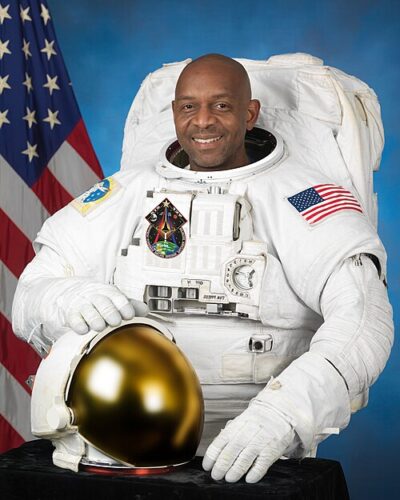
Robert Satcher
Robert Satcher is an American astronaut and orthopedic surgeon. Born September 22, 1965, in Hampton. Educated at Harvard Medical School and Massachusetts Institute of Technology (2 times).
Facts
11 facts · 1 confirmed by two sources · 4 cited · 6 from one source
Where this comes from
Papalocal keeps its own record. It started from these sources; what each one said is kept here as it was copied, so a change on their side never changes this page by itself. Tap one to read its version.
What Wikidata says · copied November 16, 2026 · revision 2568994780
- Described as
- American astronaut and orthopedic surgeon
- Other names
- Robert L. Satcher, Robert Lee Satcher
- Born
- September 22, 1965
- Born in
- Hampton
- Citizen of
- United States
- Occupation
- astronaut; chemical engineer · 1 reference; orthopedic surgeon · 1 reference
- Worked for
- Feinberg School of Medicine · 1 reference; National Aeronautics and Space Administration
- Education
- Harvard Medical School; Massachusetts Institute of Technology (2 times) (1986–1993) · 1 reference; Harvard–MIT Division of Health Sciences and Technology
- Wikipedias with a page
- 23
Wikidata item Q63610 (wikidata.org/wiki/Q63610), public domain (CC0). Copied November 16, 2026.
What Wikipedia says · copied November 16, 2026 · revision 1385852558
Robert Lee Satcher Jr. (born September 22, 1965) is an American orthopedic surgeon, chemical engineer, and former NASA astronaut. He participated in two spacewalks during STS-129, accumulating 12 hours and 19 minutes of extravehicular activity. Satcher holds two doctorates (Ph.D., M.D.) and has received numerous awards and honors as a surgeon and engineer.
- Born, in its opening lines
- September 22, 1965
From the Wikipedia article “Robert Satcher” (en.wikipedia.org/wiki/Robert_Satcher), by its contributors, under CC BY-SA 4.0 (creativecommons.org/licenses/by-sa/4.0/). Copied November 16, 2026; not changed.
Confirmed Two sources agree. Cited One source, and it names where it got it. One source One source, without a reference of its own. Sources disagree The sources disagree. We show the best-supported value and keep theirs below.
