
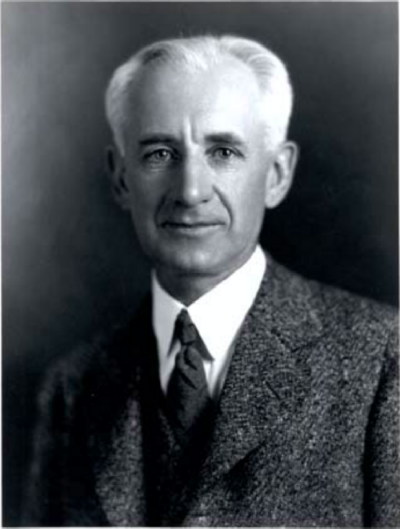
Robert Yerkes
Robert Yerkes was an American psychologist. Born May 26, 1876, in Bucks County. Died February 3, 1956, in New Haven. Positions held include President of the American Psychological Association (1917). Known for Army alpha. Educated at Harvard University and Ursinus College.
Facts
20 facts · 2 confirmed by two sources · 5 cited · 13 from one source
Where this comes from
Papalocal keeps its own record. It started from these sources; what each one said is kept here as it was copied, so a change on their side never changes this page by itself. Tap one to read its version.
What Wikidata says · copied November 16, 2026 · revision 2567451337
- Described as
- American psychologist (1876–1956)
- Other names
- Robert Mearns Yerkes
- Born
- May 26, 1876 · 4 references
- Died
- February 3, 1956 · 4 references
- Born in
- Bucks County
- Died in
- New Haven · 1 reference
- Buried in
- Evergreen Cemetery · 1 reference
- Name at birth
- Robert Mearns Yerkes
- Citizen of
- United States
- Occupation
- psychologist · 1 reference; university teacher; zoologist · 1 reference
- Positions held
- President of the American Psychological Association (1917) · 1 reference
- Worked for
- Harvard University; Yale University
- Education
- Harvard University (–1902) · 1 reference; Ursinus College (1892–1897)
- Member of
- Wicht Club (1903–1911); American Academy of Arts and Sciences; National Academy of Sciences
- Known for
- Army alpha
- Spouse
- Ada Watterson Yerkes
- Wikipedias with a page
- 20
Wikidata item Q1399298 (wikidata.org/wiki/Q1399298), public domain (CC0). Copied November 16, 2026.
What Wikipedia says · copied November 16, 2026 · revision 1371991411
Robert Mearns Yerkes (; May 26, 1876 – February 3, 1956) was an American psychologist, ethologist, eugenicist and primatologist best known for his work in intelligence testing and in the field of comparative psychology.
Yerkes was a pioneer in the study both of human and primate intelligence and of the social behavior of gorillas and chimpanzees. Along with John D. Dodson, Yerkes developed the Yerkes–Dodson law relating arousal to performance.
As time went on, Yerkes began to propagate his support for eugenics in the 1910s and 1920s. His works are largely considered by modern academics to be biased toward outmoded racialist theories.
He also served on the board of trustees of Science Service, now known as Society for Science & the Public, from 1921 to 1925. He was elected to the American Academy of Arts and Sciences in 1915, the United States National Academy of Sciences in 1923, and the American Philosophical Society in 1936.
- Born, in its opening lines
- May 26, 1876
- Died, in its opening lines
- February 3, 1956
From the Wikipedia article “Robert Yerkes” (en.wikipedia.org/wiki/Robert_Yerkes), by its contributors, under CC BY-SA 4.0 (creativecommons.org/licenses/by-sa/4.0/). Copied November 16, 2026; not changed.
Confirmed Two sources agree. Cited One source, and it names where it got it. One source One source, without a reference of its own. Sources disagree The sources disagree. We show the best-supported value and keep theirs below.
