
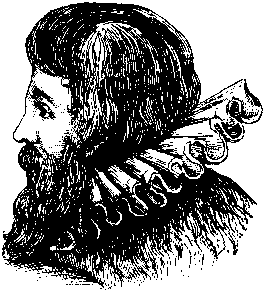
Roger Ascham
Roger Ascham was an English scholar and didactic writer. Born 1515, in Kirby Wiske. Died December 30, 1568, in London. Educated at St John's College.
Facts
10 facts · 2 confirmed by two sources · 3 cited · 5 from one source
What’s different
- Died: we show December 30, 1568 (Confirmed). Wikidata also lists December 23, 1568 and 1568
Where this comes from
Papalocal keeps its own record. It started from these sources; what each one said is kept here as it was copied, so a change on their side never changes this page by itself. Tap one to read its version.
What Wikidata says · copied November 16, 2026 · revision 2569839414
- Described as
- English scholar and didactic writer (1515-1568)
- Born
- 1515 · 20 references
- Died
- December 30, 1568 · 10 references; December 23, 1568 · 2 references; 1568 · 1 reference
- Born in
- Kirby Wiske
- Died in
- London · 1 reference
- Buried in
- St Sepulchre-without-Newgate, Holborn · 1 reference
- Citizen of
- Kingdom of England
- Occupation
- writer · 1 reference
- Worked for
- University of Cambridge
- Education
- St John's College
- Spouse
- Margaret Ascham (1554–)
- Wikipedias with a page
- 31
Wikidata item Q965811 (wikidata.org/wiki/Q965811), public domain (CC0). Copied November 16, 2026.
What Wikipedia says · copied November 16, 2026 · revision 1377928588
Roger Ascham (; c. 1515 – 30 December 1568) was an English scholar and didactic writer, famous for his prose style, his promotion of the vernacular, and his theories of education. He served in the administrations of Edward VI, Mary I, and Elizabeth I, having earlier acted as Elizabeth's tutor in Greek and Latin between 1548 and 1550.
- Born, in its opening lines
- c. 1515
- Died, in its opening lines
- December 30, 1568
From the Wikipedia article “Roger Ascham” (en.wikipedia.org/wiki/Roger_Ascham), by its contributors, under CC BY-SA 4.0 (creativecommons.org/licenses/by-sa/4.0/). Copied November 16, 2026; not changed.
Confirmed Two sources agree. Cited One source, and it names where it got it. One source One source, without a reference of its own. Sources disagree The sources disagree. We show the best-supported value and keep theirs below.
