
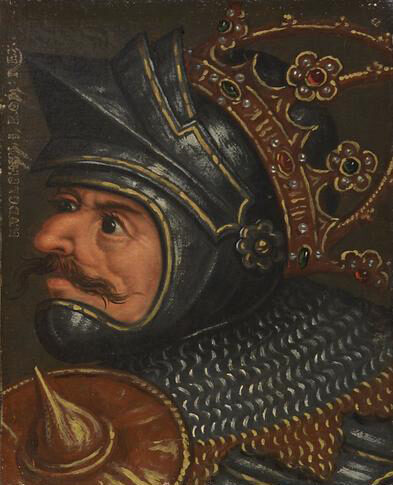
Rudolph I of Germany
Rudolph I of Germany was a count of Habsburg, king of Germany. Born May 1, 1218, in Limburg Castle. Died July 15, 1291, in Speyer. Positions held include King of the Romans (1273–1291).
Facts
22 facts · 2 confirmed by two sources · 10 cited · 10 from one source
Where this comes from
Papalocal keeps its own record. It started from these sources; what each one said is kept here as it was copied, so a change on their side never changes this page by itself. Tap one to read its version.
What Wikidata says · copied November 16, 2026 · revision 2569840029
- Described as
- count of Habsburg, king of Germany (1218–1291)
- Other names
- Rudolf I, Rudolf of Habsburg, Rudolf IV., Rudolfus I
- Born
- May 1, 1218 · 5 references
- Died
- July 15, 1291 · 5 references
- Born in
- Limburg Castle
- Died in
- Speyer · 1 reference
- Buried in
- Speyer Cathedral
- Citizen of
- Holy Roman Empire
- Occupation
- sovereign
- Positions held
- King of the Romans (1273–1291)
- Spouse
- Gertrude of Hohenberg (1245–1281) · 2 references; Isabella of Burgundy (1284–1291) · 2 references
- Children
- Matilda of Habsburg · 1 reference; Albert I of Germany · 1 reference; Catherine of Habsburg · 1 reference; Agnes of Habsburg; Clemence of Austria · 1 reference; Rudolf II, Duke of Austria; Judith of Habsburg · 1 reference; Hedwig of Habsburg · 2 references; Hartmann von Habsburg · 1 reference; Albrecht von Löwenstein-Schenkenberg · 1 reference
- Father
- Albert IV, Count of Habsburg
- Mother
- Hedwig
- Wikipedias with a page
- 61
Wikidata item Q76956 (wikidata.org/wiki/Q76956), public domain (CC0). Copied November 16, 2026.
What Wikipedia says · copied November 16, 2026 · revision 1385897555
Rudolf of Habsburg (1 May 1218 – 15 July 1291) was a German nobleman and the first member of the House of Habsburg to become King of the Romans, reigning from 1273 until his death.
Born into a relatively minor noble family, Rudolf succeeded his father as Count of Habsburg in 1240, gradually expanding his power through military campaigns, political alliances, and the construction of key fortresses such as Neuhabsburg Castle. His marriage to Gertrude of Hohenberg further strengthened his position among the Swabian nobility.
During the turbulent period of the Great Interregnum, Rudolf distinguished himself both as a formidable military leader—participating in regional conflicts and even joining the Prussian Crusade in 1254—and as a restorer of order, often intervening against robber barons and feuding nobles.
Despite facing excommunication due to disputes with the Church, Rudolf ultimately reconciled with ecclesiastical authorities and built a reputation for fairness and pragmatism. In 1273, he was elected King of the Romans, ending decades of imperial vacancy and division.
As king, Rudolf reasserted imperial authority in Germany, notably defeating King Ottokar II of Bohemia and securing Habsburg control over Austria, Styria, and Carinthia. His reign laid the foundations for the rise of the Habsburg dynasty, which would become one of the most influential royal houses in European history. Rudolf died in 1291, leaving a legacy of restored stability and dynastic ambition within the Holy Roman Empire.
- Born, in its opening lines
- May 1, 1218
- Died, in its opening lines
- July 15, 1291
From the Wikipedia article “Rudolf I of Germany” (en.wikipedia.org/wiki/Rudolf_I_of_Germany), by its contributors, under CC BY-SA 4.0 (creativecommons.org/licenses/by-sa/4.0/). Copied November 16, 2026; not changed.
Confirmed Two sources agree. Cited One source, and it names where it got it. One source One source, without a reference of its own. Sources disagree The sources disagree. We show the best-supported value and keep theirs below.
