
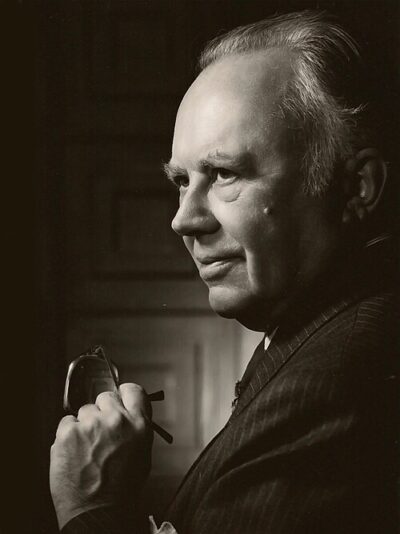
Russell Kirk
Russell Kirk was an American political theorist, moralist, historian, social critic, literary critic, and writer. Born October 19, 1918, in Plymouth. Died April 29, 1994, in Mecosta. Educated at University of St Andrews and Duke University. Awards include Guggenheim Fellowship, Presidential Citizens Medal and World Fantasy Award for Best Short Fiction.
Facts
20 facts · 2 confirmed by two sources · 7 cited · 11 from one source
Where this comes from
Papalocal keeps its own record. It started from these sources; what each one said is kept here as it was copied, so a change on their side never changes this page by itself. Tap one to read its version.
What Wikidata says · copied November 15, 2026 · revision 2534183499
- Described as
- American political theorist, moralist, historian, social critic, literary critic, and writer (1918–1994)
- Other names
- Russell Amos Kirk
- Born
- October 19, 1918 · 3 references
- Died
- April 29, 1994 · 2 references
- Born in
- Plymouth · 1 reference
- Died in
- Mecosta
- Citizen of
- United States
- Occupation
- political scientist · 1 reference; philosopher · 1 reference; literary critic · 1 reference; historian · 1 reference; novelist; writer; science fiction writer; journalist
- Education
- University of St Andrews · 1 reference; Duke University; Michigan State University
- Awards
- Guggenheim Fellowship (1954) · 1 reference; Presidential Citizens Medal; World Fantasy Award for Best Short Fiction (1977) · 1 reference
- Religion
- Catholic Church
- Wikipedias with a page
- 29
Wikidata item Q158997 (wikidata.org/wiki/Q158997), public domain (CC0). Copied November 15, 2026.
What Wikipedia says · copied November 15, 2026 · revision 1383251125
Russell Amos Kirk (October 19, 1918 – April 29, 1994) was an American political philosopher, moralist, historian, social critic, literary critic, lecturer, author, and novelist who influenced 20th-century American conservatism. In 1953, he authored The Conservative Mind, which outlined and traced the development of socio-conservative thought in the works of Anglo-American tradition, such as those of Edmund Burke. The book helped establish the intellectual framework for a religious and humanistic understanding of conservatism in the postwar era. Kirk was the chief proponent of traditionalist conservatism.
Scholars have identified Kirk as an important twentieth-century proponent of Christian humanism, placing him in conversation with figures such as T. S. Eliot, Christopher Dawson, and Romano Guardini.
He was also an accomplished author of Gothic and ghost story fiction.
In 1953, Clinton Rossiter said that thanks to Kirk, "the so-called 'new conservatism' of the postwar period takes on new substance and meaning". In 2013, Alfred Regnery called The Conservative Mind "the catalyst that began the transformation of a band of disparate conservative critics into the political, cultural, and intellectual force that it is today."
- Born, in its opening lines
- October 19, 1918
- Died, in its opening lines
- April 29, 1994
From the Wikipedia article “Russell Kirk” (en.wikipedia.org/wiki/Russell_Kirk), by its contributors, under CC BY-SA 4.0 (creativecommons.org/licenses/by-sa/4.0/). Copied November 15, 2026; not changed.
Confirmed Two sources agree. Cited One source, and it names where it got it. One source One source, without a reference of its own. Sources disagree The sources disagree. We show the best-supported value and keep theirs below.
