
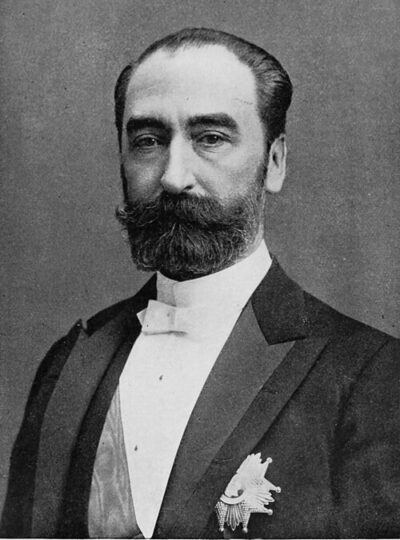
Sadi Carnot
Sadi Carnot was the 5th president of France. Born August 11, 1837, in Limoges. Died June 25, 1894, in 3rd arrondissement of Lyon. Positions held include President of the French Republic (1887–1894), member of the National Assembly (1871–1876) and French co-prince of Andorra (1887–1894). Known for Carnot bridge. Educated at Lycée Condorcet and École polytechnique. Awards include Grand Cross of the Legion of Honour, Order of St. Andrew and Grand Master of the Legion of Honour.
Facts
36 facts · 2 confirmed by two sources · 7 cited · 27 from one source
Where this comes from
Papalocal keeps its own record. It started from these sources; what each one said is kept here as it was copied, so a change on their side never changes this page by itself. Tap one to read its version.
What Wikidata says · copied November 16, 2026 · revision 2560185966
- Described as
- 5th president of France (1837–1894)
- Other names
- Marie François Carnot, Marie François Sadi Carnot
- Born
- August 11, 1837 · 14 references
- Died
- June 25, 1894 · 5 references
- Born in
- Limoges · 2 references
- Died in
- 3rd arrondissement of Lyon · 2 references
- Buried in
- Panthéon
- Cause of death
- stab wound
- Name at birth
- Marie François Sadi Carnot
- Citizen of
- France
- Occupation
- politician · 1 reference; civil engineer; engineer; official
- Positions held
- President of the French Republic (1887–1894); member of the National Assembly (1871–1876) · 1 reference; French co-prince of Andorra (1887–1894); Prefect of Seine-Maritime (1871); Deputy of the French Third Republic (1876–1887) · 1 reference
- Political party
- Republican Left
- Education
- Lycée Condorcet; École polytechnique; École Nationale des Ponts et Chaussées · 1 reference
- Known for
- Carnot bridge
- Awards
- Grand Cross of the Legion of Honour; Order of St. Andrew; Grand Master of the Legion of Honour; Royal Order of Cambodia; Order of the Dragon of Annam; Knight Grand Cross in the Order of the Netherlands Lion (1892) · 1 reference; Knight of the Order of the Elephant (1891) · 1 reference; Order of the Chrysanthemum · 1 reference
- Spouse
- Cécile Carnot
- Children
- Lazare-Hippolyte-Sadi Carnot; Ernest Carnot; François Carnot · 1 reference
- Father
- Hippolyte Carnot
- Siblings
- Marie-Adolphe Carnot
- Wikipedias with a page
- 60
Wikidata item Q215778 (wikidata.org/wiki/Q215778), public domain (CC0). Copied November 16, 2026.
What Wikipedia says · copied November 16, 2026 · revision 1384414198
Marie François Sadi Carnot (English: kar-NOH, French: [maʁi fʁɑ̃swa sadi kaʁno]; 11 August 1837 – 25 June 1894), known as Sadi Carnot, was a French statesman who served as President of France from 1887 until his assassination in 1894.
His presidency was marked by a series of poorly handled crises. General Boulanger's rapid rise and failed attempt to march on the Élysée in 1889 posed the first serious threat to the republic during Carnot's term. Then came a series of ministerial crises, financial scandals, labour turmoil, anarchist violence, and finally Carnot's own assassination in 1894. The Panama scandals, involving bribes to parliamentarians, resulted in major financial losses and deeply embarrassed those involved. The extreme right-wing newspaper La Libre Parole, run by antisemitic publicist Édouard Drumont, escalated intolerance towards Third Republic politics.
Carnot presided over a few achievements. He was well received when he travelled around France, inaugurated the 1889 exhibition celebrating the French Revolution, and facilitated a diplomatic rapprochement with Russia. His term in office bolstered the power and influence of the presidency.
- Born, in its opening lines
- August 11, 1837
- Died, in its opening lines
- June 25, 1894
From the Wikipedia article “Sadi Carnot (statesman)” (en.wikipedia.org/wiki/Sadi_Carnot_(statesman)), by its contributors, under CC BY-SA 4.0 (creativecommons.org/licenses/by-sa/4.0/). Copied November 16, 2026; not changed.
Confirmed Two sources agree. Cited One source, and it names where it got it. One source One source, without a reference of its own. Sources disagree The sources disagree. We show the best-supported value and keep theirs below.
