
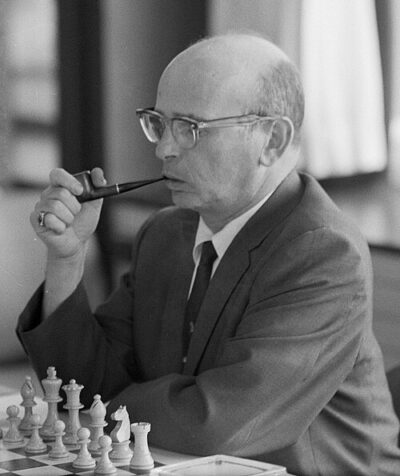
Samuel Reshevsky
Samuel Reshevsky was an American chess player. Born November 26, 1911, in Ozorków. Died April 4, 1992, in New York City. Educated at University of Chicago.
Facts
15 facts · 2 confirmed by two sources · 6 cited · 7 from one source
Where this comes from
Papalocal keeps its own record. It started from these sources; what each one said is kept here as it was copied, so a change on their side never changes this page by itself. Tap one to read its version.
What Wikidata says · copied November 13, 2026 · revision 2563199426
- Described as
- American chess player
- Other names
- Samuel Herman Reshevsky
- Born
- November 26, 1911 · 3 references
- Died
- April 4, 1992 · 3 references
- Born in
- Ozorków
- Died in
- New York City
- Name at birth
- Szmul Rzeszewski · 1 reference
- Citizen of
- Poland; United States · 1 reference
- Occupation
- chess player · 1 reference; journalist; bookkeeper · 1 reference; athlete · 1 reference
- Education
- University of Chicago
- Sport
- chess
- Field
- chess · 1 reference; accounting · 1 reference
- Wikipedias with a page
- 45
Wikidata item Q311737 (wikidata.org/wiki/Q311737), public domain (CC0). Copied November 13, 2026.
What Wikipedia says · copied November 13, 2026 · revision 1384414943
Samuel Herman Reshevsky (born Szmul Rzeszewski; November 26, 1911 – April 4, 1992) was a Polish chess prodigy and later a leading American chess grandmaster. He was a contender for the World Chess Championship from the mid-1930s to the late 1960s. He tied for third place in the 1948 World Chess Championship tournament, tied for second in the 1953 Candidates tournament, and was a Candidate as late as 1968. He was a seven-time winner of the US Chess Championship.
He was an accountant by profession, and also a chess writer.
- Born, in its opening lines
- November 26, 1911
- Died, in its opening lines
- April 4, 1992
From the Wikipedia article “Samuel Reshevsky” (en.wikipedia.org/wiki/Samuel_Reshevsky), by its contributors, under CC BY-SA 4.0 (creativecommons.org/licenses/by-sa/4.0/). Copied November 13, 2026; not changed.
Confirmed Two sources agree. Cited One source, and it names where it got it. One source One source, without a reference of its own. Sources disagree The sources disagree. We show the best-supported value and keep theirs below.
