
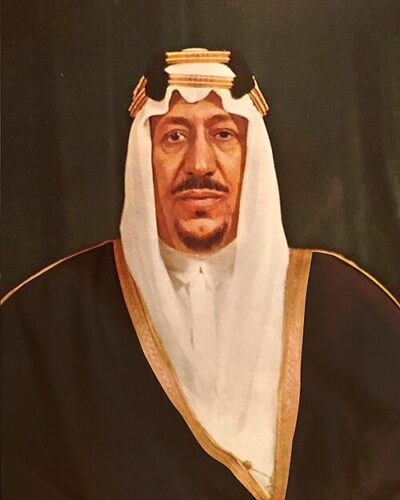
Saud of Saudi Arabia
Saud of Saudi Arabia was a King of Saudi Arabia from 1953 to 1964. Born January 15, 1902, in Kuwait City. Died February 23, 1969, in Athens. Positions held include King of Saudi Arabia (1953–1964), Crown Prince of Saudi Arabia (1933–1953) and Prime Minister of Saudi Arabia (1953–1964). Awards include Commander of the Legion of Merit, Order of the Umayyads and Order of King Abdulaziz al Saud.
Facts
52 facts · 2 confirmed by two sources · 3 cited · 47 from one source
Where this comes from
Papalocal keeps its own record. It started from these sources; what each one said is kept here as it was copied, so a change on their side never changes this page by itself. Tap one to read its version.
What Wikidata says · copied November 16, 2026 · revision 2568952997
- Described as
- King of Saudi Arabia from 1953 to 1964
- Other names
- Saʻūd ibn ʻAbd al-ʻAzīz Āl Saʻūd, Saud bin Abdul Aziz, King Saud, Saud bin Abdulaziz Al Saud, King Saud of Saudi Arabia
- Born
- January 15, 1902 · 2 references
- Died
- February 23, 1969 · 1 reference
- Born in
- Kuwait City
- Died in
- Athens
- Buried in
- Al Oud cemetery
- Cause of death
- myocardial infarction
- Citizen of
- Saudi Arabia · 1 reference
- Occupation
- politician; military personnel; statesperson; monarch; diplomat; heir apparent
- Positions held
- King of Saudi Arabia (1953–1964); Crown Prince of Saudi Arabia (1933–1953); Prime Minister of Saudi Arabia (1953–1964) · 1 reference
- Member of
- list of rulers of Saudi Arabia (1953)
- Awards
- Commander of the Legion of Merit; Order of the Umayyads; Order of King Abdulaziz al Saud; Legionnaire of Legion of Merit (1947); Imperial Order of the Yoke and Arrows (1952) · 1 reference; Collar of the Spanish Order of the Civil Merit (1962) · 2 references; Honorary Knight Grand Cross of the Order of the British Empire
- Children
- Mishari bin Saud bin Abdulaziz Al Saud; Fahda bint Saud; Abdul Rahman bin Saud Al Saud; Fahad bin Saud bin Abdulaziz Al Saud; Basmah bint Saud; Muhammed bin Saud Al Saud; Mishaal bin Saud; Badr bin Saud bin Abdulaziz Al Saud; Hussam bin Saud bin Abdulaziz Al Saud; Mashhoor bin Saud bin Abdulaziz Al Saud · 1 reference; Prince Bandar bin Saud bin Abdul Aziz Al Saud; Noura bint Saud
- Father
- Ibn Saud
- Mother
- Wadhah Bint Muhammad
- Siblings
- Al-Bandari bint Abdul-Aziz Al Saud; Al Jawhara bint Abdulaziz Al Saud; Latifa bint Abdulaziz Al Saud; Seeta bint Abdulaziz Al Saud; Musa'id bin Abdulaziz Al Saud; Mutaib bin Abdulaziz Al Saud; Fahd bin Abdulaziz Al Saud; Muhammad bin Abdulaziz Al Saud; Turki I bin Abdul; Khalid of Saudi Arabia · 1 reference
- Religion
- Islam
- Military branch
- Saudi Arabian Armed Forces (1915–1933)
- Military rank
- Supreme Commander of all military forces (1953–1964)
- Website
- https://kingsaud.org
- Wikipedias with a page
- 69
Wikidata item Q244206 (wikidata.org/wiki/Q244206), public domain (CC0). Copied November 16, 2026.
What Wikipedia says · copied November 16, 2026 · revision 1383182497
Saud bin Abdulaziz Al Saud (Arabic: سعود بن عبد العزيز آل سعود; 15 January 1902 – 23 February 1969) was King of Saudi Arabia from 9 November 1953 until his abdication on 2 November 1964. During his reign, he served as Prime Minister of Saudi Arabia from 1953 to 1954 and from 1960 to 1962. Prior to his accession, Saud was Crown Prince of Saudi Arabia from 11 May 1933 to 9 November 1953. He was the second son of King Abdulaziz, the founder of Saudi Arabia.
Saud was the second son of King Abdulaziz and Wadha bint Muhammad Al Orair. The death of Saud's elder brother, Prince Turki, in 1919 poised Saud to become his father's successor; King Abdulaziz appointed him as the crown prince of Saudi Arabia in 1933. Saud served as a commander in Abdulaziz's conquests that led to the establishment of Saudi Arabia in 1932. He was the viceroy of Nejd from 1926 to 1932, and he also represented his father in neighboring countries. He played a role in the financial reforms of Saudi Arabia, preparing the first state budget in 1948 and establishing the Saudi Central Bank in 1952. Saud also oversaw the country's infrastructural development.
Upon his father's death in 1953, Saud ascended the throne and reorganized the government. He founded the convention that the king of Saudi Arabia presides over the Council of Ministers. Saud sought to maintain friendly relations with the United States, whilst also supporting other Arab countries in their conflicts against Israel. Under his reign, Saudi Arabia joined the Non-Aligned Movement in 1961. However, Saud's inability to counter the Saudi national debt brought him into a power struggle with his half-brother and crown prince, Faisal, culminating in the forced abdication of Saud and the proclamation of Faisal as king. Saud went into exile and made an unsuccessful attempt, supported by some of his sons, to take back the throne. He died in Athens, Greece, in 1969.
- Born, in its opening lines
- January 15, 1902
- Died, in its opening lines
- February 23, 1969
From the Wikipedia article “Saud of Saudi Arabia” (en.wikipedia.org/wiki/Saud_of_Saudi_Arabia), by its contributors, under CC BY-SA 4.0 (creativecommons.org/licenses/by-sa/4.0/). Copied November 16, 2026; not changed.
Confirmed Two sources agree. Cited One source, and it names where it got it. One source One source, without a reference of its own. Sources disagree The sources disagree. We show the best-supported value and keep theirs below.
