
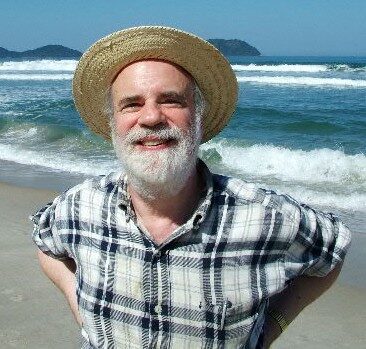
Saul Kripke
Saul Kripke was an American philosopher and logician. Born November 13, 1940, in Bay Shore. Died September 15, 2022, in New York City. Known for Naming and Necessity. Educated at Harvard University and Omaha Central High School. Awards include Guggenheim Fellowship, Rolf Schock Prize in Logic and Philosophy and Fulbright Scholarship.
Facts
35 facts · 2 confirmed by two sources · 8 cited · 25 from one source
Where this comes from
Papalocal keeps its own record. It started from these sources; what each one said is kept here as it was copied, so a change on their side never changes this page by itself. Tap one to read its version.
What Wikidata says · copied November 13, 2026 · revision 2558234116
- Described as
- American philosopher and logician (1940–2022)
- Other names
- Saul Aaron Kripke, Saul A. Kripke
- Born
- November 13, 1940 · 6 references
- Died
- September 15, 2022 · 2 references
- Born in
- Bay Shore
- Died in
- New York City · 1 reference
- Cause of death
- pancreatic cancer
- Citizen of
- United States
- Occupation
- philosopher · 2 references; university teacher; writer · 2 references; mathematician; logician
- Worked for
- Princeton University; City University of New York · 2 references; The Rockefeller University · 1 reference; CUNY Graduate School and University Center · 1 reference
- Education
- Harvard University (–1962); Omaha Central High School
- Member of
- Norwegian Academy of Science and Letters; European Academy of Sciences and Arts; American Academy of Arts and Sciences; Logicians Liberation League · 1 reference
- Known for
- Naming and Necessity · 1 reference
- Awards
- Guggenheim Fellowship · 1 reference; Rolf Schock Prize in Logic and Philosophy (2001); Fulbright Scholarship
- Field
- contemporary philosophy; Western philosophy; analytic philosophy; philosophy of language; logic; metaphysics
- Father
- Myer S. Kripke
- Mother
- Dorothy K. Kripke
- Siblings
- Madeline Kripke
- Religion
- Judaism
- Wikipedias with a page
- 51
Wikidata item Q298521 (wikidata.org/wiki/Q298521), public domain (CC0). Copied November 13, 2026.
What Wikipedia says · copied November 13, 2026 · revision 1385287589
Saul Aaron Kripke (; November 13, 1940 – September 15, 2022) was an American philosopher and logician. He was a distinguished professor of philosophy at the Graduate Center of the City University of New York and a professor emeritus at Princeton University. From the 1960s until his death, he was a central figure in a number of fields related to mathematical and modal logic, philosophy of language and mathematics, metaphysics, epistemology, and recursion theory.
Kripke made influential and original contributions to logic, especially modal logic. His principal contribution is a semantics for modal logic involving possible worlds, now called Kripke semantics. He received the 2001 Schock Prize in Logic and Philosophy.
Kripke was also partly responsible for the revival of metaphysics and essentialism after the decline of logical positivism, claiming necessity is a metaphysical notion distinct from the epistemic notion of a priori, and that there are necessary truths that are known a posteriori, such as that water is H2O. A 1970 Princeton lecture series, published in book form in 1980 as Naming and Necessity, is considered one of the most important philosophical works of the 20th century. It introduced the concept of names as rigid designators, designating (picking out, denoting, referring to) the same object in every possible world, as contrasted with descriptions. It also established Kripke's causal theory of reference, disputing the descriptivist theory found in Gottlob Frege's concept of sense and Bertrand Russell's theory of descriptions. Kripke is often seen in opposition to the other great late-20th-century philosopher to eschew logical positivism: W. V. O. Quine. Quine rejected essentialism and modal logic.
Kripke also gave an original reading of Ludwig Wittgenstein, known as "Kripkenstein", in his Wittgenstein on Rules and Private Language. The book contains his rule-following argument, a paradox for skepticism about meaning. Much of his work remains unpublished or exists only as tape recordings and privately circulated manuscripts.
- Born, in its opening lines
- November 13, 1940
- Died, in its opening lines
- September 15, 2022
From the Wikipedia article “Saul Kripke” (en.wikipedia.org/wiki/Saul_Kripke), by its contributors, under CC BY-SA 4.0 (creativecommons.org/licenses/by-sa/4.0/). Copied November 13, 2026; not changed.
Confirmed Two sources agree. Cited One source, and it names where it got it. One source One source, without a reference of its own. Sources disagree The sources disagree. We show the best-supported value and keep theirs below.
