
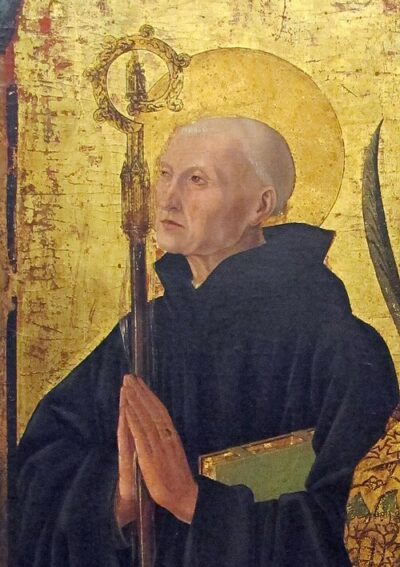
Severinus of Noricum
Severinus of Noricum was an Italian Roman Catholic saint. Born January 8, 410, in Southern Italy. Died January 8, 482, in Mautern an der Donau.
Facts
6 facts · 2 confirmed by two sources · 2 cited · 2 from one source
Where this comes from
Papalocal keeps its own record. It started from these sources; what each one said is kept here as it was copied, so a change on their side never changes this page by itself. Tap one to read its version.
What Wikidata says · copied November 18, 2026 · revision 2570812419
- Described as
- Italian Roman Catholic saint
- Born
- January 8, 410
- Died
- January 8, 482 · 3 references
- Born in
- Southern Italy
- Died in
- Mautern an der Donau · 1 reference
- Occupation
- monk · 1 reference
- Religion
- Catholic Church
- Wikipedias with a page
- 22
Wikidata item Q458643 (wikidata.org/wiki/Q458643), public domain (CC0). Copied November 18, 2026.
What Wikipedia says · copied November 18, 2026 · revision 1353225570
Severinus of Noricum (c. 410 – 8 January 482) is a saint, known as the "Apostle to Noricum". It has been speculated that he was born in either Southern Italy or in the Roman province of Africa. Severinus himself refused to discuss his personal history before his appearance along the Danube in Noricum, after the death of Attila in 453. However, he did mention experiences with eastern desert monasticism, and his vita draws connections between Severinus and Saint Anthony of Lerins.
Saint Severinus of Noricum is not to be confused with Severinus of Septempeda, bishop of San Severino Marche and brother of Saint Victorinus of Camerino.
According to Thompson, the saint had been a public figure of the utmost importance and held the consulship himself in 461.
- Born, in its opening lines
- c. 410
- Died, in its opening lines
- January 8, 482
From the Wikipedia article “Severinus of Noricum” (en.wikipedia.org/wiki/Severinus_of_Noricum), by its contributors, under CC BY-SA 4.0 (creativecommons.org/licenses/by-sa/4.0/). Copied November 18, 2026; not changed.
Confirmed Two sources agree. Cited One source, and it names where it got it. One source One source, without a reference of its own. Sources disagree The sources disagree. We show the best-supported value and keep theirs below.
