
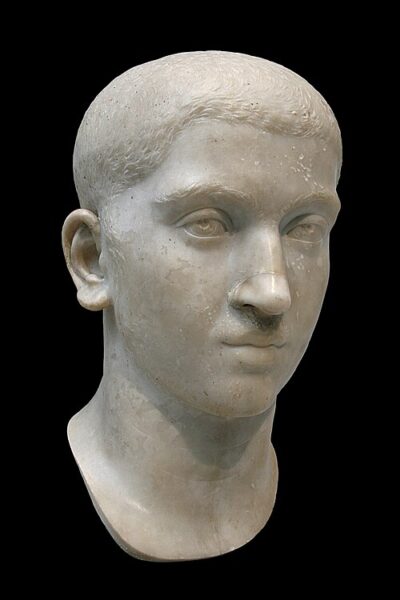
Severus Alexander
Severus Alexander was a Roman Emperor. Born October 1, 208, in Tell Arqa. Died March 19, 235, in Mogontiacum. Positions held include Roman emperor (222–235), ancient Roman senator and Roman consul.
Facts
19 facts · 2 confirmed by two sources · 3 cited · 13 from one source · 1 where the sources disagree
What’s different
- Father: we show Elagabalus (Sources disagree). Wikidata also lists Caracalla
Where this comes from
Papalocal keeps its own record. It started from these sources; what each one said is kept here as it was copied, so a change on their side never changes this page by itself. Tap one to read its version.
What Wikidata says · copied November 16, 2026 · revision 2568845088
- Described as
- Roman Emperor (208-235)
- Other names
- Marcus Aurelius Severus Alexander, Alexianus Bassianus, Alexander Severus, Alexander Mammaeae, Alexander of Mammaea, Alexianus, Marcus Aurelius Severus Alexianus
- Born
- October 1, 208 · 1 reference
- Died
- March 19, 235
- Born in
- Tell Arqa
- Died in
- Mogontiacum
- Buried in
- Rome · 1 reference
- Citizen of
- Ancient Rome
- Occupation
- politician
- Positions held
- Roman emperor (222–235); ancient Roman senator; Roman consul
- Spouse
- Sallustia Orbiana; Sulpicia Memmia · 1 reference
- Father
- Elagabalus · 1 reference; Caracalla
- Mother
- Julia Avita Mamaea · 3 references
- Siblings
- Theoclia; Marcus Julius Gessius Bassianus; Elagabalus; Aurelia Antonina
- Religion
- ancient Roman religion
- Wikipedias with a page
- 81
Wikidata item Q1769 (wikidata.org/wiki/Q1769), public domain (CC0). Copied November 16, 2026.
What Wikipedia says · copied November 16, 2026 · revision 1382579173
Marcus Aurelius Severus Alexander (1 October 208 AD – March 235 AD), also known as Alexander Severus, was Roman emperor from 222 until 235 AD. He was the last emperor from the Severan dynasty and, at the age of 13, became the youngest sole emperor of the united Roman Empire.
Alexander became emperor at age 13, succeeding his slain cousin, Emperor Elagabalus as his heir. Alexander and Elagabalus were both grandsons of Julia Maesa, the sister of the empress Julia Domna, who had arranged for Elagabalus's acclamation as emperor by the Third Gallic Legion.
Elagabalus had been murdered along with his mother Julia Soaemias by his own guards, who, as a mark of contempt, had the two bodies cast into the Tiber river.
Alexander's 13-year reign was the longest reign of a sole emperor since Antoninus Pius and in peace proved prosperous. However, Rome faced military threats from the rising power of the Sassanid Empire, as well as growing incursions from the tribes of Germania. Alexander managed to check the threat of the Sassanids, but attempted to bring peace by engaging in diplomacy and bribery when campaigning against Germanic tribes. This policy alienated many in the Roman army, leading to a conspiracy that resulted in the assassination of Alexander, along with his mother Julia Avita Mamaea and his advisors. Being succeeded by Maximinus Thrax, Alexander's death constituted the epoch event for the Crisis of the Third Century, bringing in its wake nearly fifty years of civil war, foreign invasion, and the collapse of the monetary economy.
Because of his mother, he was nicknamed Mamaeas (Μαμαίας). He was also referenced in Hebrew sources as Aseverus, son of Antonius.
- Born, in its opening lines
- October 1, 208
- Died, in its opening lines
- March 235
From the Wikipedia article “Severus Alexander” (en.wikipedia.org/wiki/Severus_Alexander), by its contributors, under CC BY-SA 4.0 (creativecommons.org/licenses/by-sa/4.0/). Copied November 16, 2026; not changed.
Confirmed Two sources agree. Cited One source, and it names where it got it. One source One source, without a reference of its own. Sources disagree The sources disagree. We show the best-supported value and keep theirs below.
