
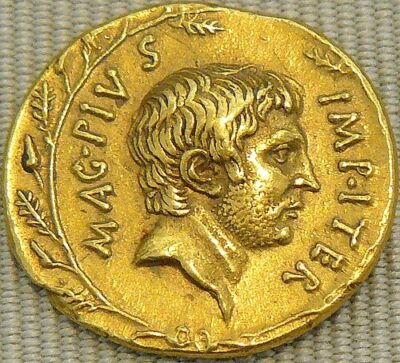
Sextus Pompey
Sextus Pompey was a Roman politician and general (c. 67–35 BC). Born 68 BC, in Ancient Rome. Died 35 BC, in Miletus. Positions held include Roman consul and moneyer (-45–-44).
Facts
17 facts · 0 confirmed by two sources · 8 cited · 9 from one source
Where this comes from
Papalocal keeps its own record. It started from these sources; what each one said is kept here as it was copied, so a change on their side never changes this page by itself. Tap one to read its version.
What Wikidata says · copied November 16, 2026 · revision 2567484143
- Described as
- Roman politician and general (c. 67–35 BC)
- Other names
- Sextus Pompeius, Sextus Pompeius Magnus Pius
- Born
- 68 BC · 1 reference
- Died
- 35 BC · 2 references
- Born in
- Ancient Rome
- Died in
- Miletus · 1 reference
- Citizen of
- Ancient Rome
- Occupation
- politician · 1 reference; military personnel
- Positions held
- Roman consul; moneyer (-45–-44)
- Spouse
- Scribonia
- Children
- Pompeia
- Father
- Pompey · 2 references
- Mother
- Mucia Tertia · 1 reference
- Siblings
- Pompeia Magna · 1 reference; Gnaeus Pompeius Magnus · 1 reference; Marcus Aemilius Scaurus · 1 reference; Pompeia
- Wikipedias with a page
- 37
Wikidata item Q295228 (wikidata.org/wiki/Q295228), public domain (CC0). Copied November 16, 2026.
What Wikipedia says · copied November 16, 2026 · revision 1372950865
Sextus Pompeius Magnus Pius (c. 67 – 35 BC), also known in English as Sextus Pompey, was a Roman military leader who, throughout his life, upheld the cause of his father, Pompey the Great, against Julius Caesar and his supporters during the last civil wars of the Roman Republic.
Sextus Pompey formed the last organized opposition to the Second Triumvirate, in defiance of which he succeeded in establishing an independent state in Sicily for several years.
From the Wikipedia article “Sextus Pompey” (en.wikipedia.org/wiki/Sextus_Pompey), by its contributors, under CC BY-SA 4.0 (creativecommons.org/licenses/by-sa/4.0/). Copied November 16, 2026; not changed.
Confirmed Two sources agree. Cited One source, and it names where it got it. One source One source, without a reference of its own. Sources disagree The sources disagree. We show the best-supported value and keep theirs below.
