
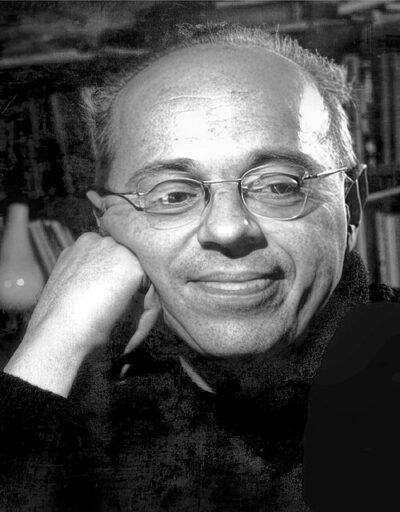
Stanisław Lem
Stanisław Lem was a Polish science fiction author, philosopher and futurologist, studied medical doctor. Born September 12, 1921, in Lviv. Died March 27, 2006, in Kraków. Known for Solaris, Summa Technologiae and The Star Diaries. Educated at Danylo Halytsky Lviv National Medical University and Jagiellonian University. Awards include Order of the White Eagle (Third Polish Republic), Golden Medal for Merit to Culture and Franz Kafka Prize.
Facts
62 facts · 2 confirmed by two sources · 15 cited · 45 from one source
Where this comes from
Papalocal keeps its own record. It started from these sources; what each one said is kept here as it was copied, so a change on their side never changes this page by itself. Tap one to read its version.
What Wikidata says · copied November 16, 2026 · revision 2565532779
- Described as
- Polish science fiction author, philosopher and futurologist, studied medical doctor (1921–2006)
- Other names
- Stanislav Lem, Stanisław Herman Lem
- Born
- September 12, 1921 · 20 references
- Died
- March 27, 2006 · 18 references
- Born in
- Lviv · 3 references
- Died in
- Kraków · 2 references
- Buried in
- Salwator Cemetery
- Name at birth
- Stanisław Herman Lem
- Citizen of
- Poland
- Occupation
- philosopher · 2 references; essayist · 1 reference; satirist; screenwriter; science fiction writer; futurist; writer · 2 references; poet · 1 reference
- Education
- Danylo Halytsky Lviv National Medical University (1939–1941); Jagiellonian University
- Member of
- Polish Academy of Learning; Stowarzyszenie Pisarzy Polskich · 1 reference; Polish Writers' Union · 1 reference; Polish Academy of Sciences; Science Fiction Research Association
- Genre
- science fiction literature; science fiction · 1 reference; futures studies · 1 reference
- Known for
- Solaris; Summa Technologiae; The Star Diaries; Fiasco; Golem XIV; The Astronauts; Fables for Robots; The Cyberiad; Czas nieutracony; The Man from Mars
- Awards
- Order of the White Eagle (Third Polish Republic) (1996) · 1 reference; Golden Medal for Merit to Culture (2005) · 1 reference; Franz Kafka Prize (1991); Grand Prix de Littérature Policière (1979) · 1 reference; Work Flag Order, 2nd class (1979); Commander of the Order of Polonia Restituta (1970); Officer of the Order of Polonia Restituta (1959); Gold Cross of Merit (1955); honorary citizen of Kraków (2003); Austrian State Prize for European Literature (1985) · 1 reference; Geffen Award (2003); honorary doctor of the Jagiellonian University of Krakow · 1 reference; Kraków Book of the Month (1999); Polish PEN Club Award Jan Parandowski (1995); Seiun Awards (1977)
- Field
- philosophy; science fiction · 1 reference; drama · 1 reference; science fiction literature · 1 reference
- Spouse
- Barbara Lem (1953–2006)
- Children
- Tomasz Lem · 1 reference
- Father
- Samuel Lem
- Religion
- atheism · 1 reference
- Lived in
- Kraków (1988–2006); Vienna (1982–1988); Lviv (1921–1946)
- Website
- https://lem.pl
- Wikipedias with a page
- 103
Wikidata item Q6530 (wikidata.org/wiki/Q6530), public domain (CC0). Copied November 16, 2026.
What Wikipedia says · copied November 16, 2026 · revision 1384458296
Stanisław Herman Lem (Polish: [staˈɲiswaf ˈlɛm] ; 12 September 1921 – 27 March 2006) was a Polish writer. He was the author of many novels, short stories, and essays on various subjects, including philosophy, futurology, and literary criticism. Many of his science fiction stories are of satirical and humorous character. Lem's books have been translated into more than 50 languages and have sold more than 45 million copies. Worldwide, he is best known as the author of the 1961 novel Solaris. In 1976, Theodore Sturgeon wrote that Lem was the most widely read science fiction writer in the world.
Lem was the author of the fundamental philosophical work Summa Technologiae, in which he anticipated the creation of virtual reality, artificial intelligence, and also developed the ideas of human autoevolution, the creation of artificial worlds, and many others. Lem's science fiction works explore philosophical themes through speculations on technology, the nature of intelligence, the impossibility of communication with and understanding of alien intelligence, despair about human limitations, and humanity's place in the universe. His essays and philosophical books cover these and many other topics. Translating his works is difficult due to Lem's elaborate neologisms and idiomatic wordplay.
The Sejm (the lower house of the Polish Parliament) declared 2021 Stanisław Lem Year.
- Born, in its opening lines
- September 12, 1921
- Died, in its opening lines
- March 27, 2006
From the Wikipedia article “Stanisław Lem” (en.wikipedia.org/wiki/Stanisław_Lem), by its contributors, under CC BY-SA 4.0 (creativecommons.org/licenses/by-sa/4.0/). Copied November 16, 2026; not changed.
Confirmed Two sources agree. Cited One source, and it names where it got it. One source One source, without a reference of its own. Sources disagree The sources disagree. We show the best-supported value and keep theirs below.
