
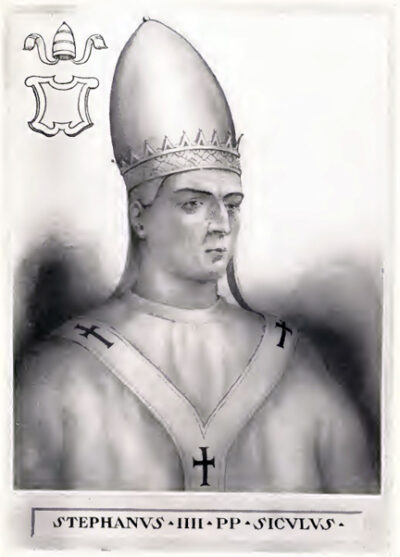
Stephen III was a pope. Born 720, in Syracuse. Died January 24, 772, in Rome. Positions held include Pope (768–772).
Facts
9 facts · 2 confirmed by two sources · 2 cited · 5 from one source
Where this comes from
Papalocal keeps its own record. It started from these sources; what each one said is kept here as it was copied, so a change on their side never changes this page by itself. Tap one to read its version.
What Wikidata says · copied November 16, 2026 · revision 2565474495
- Described as
- pope
- Other names
- Pope Stephen III, Stephanus III, Pope Stephanus III, Stephanus IV
- Born
- 720 · 1 reference
- Died
- January 24, 772 · 2 references
- Born in
- Syracuse
- Died in
- Rome · 1 reference
- Buried in
- St. Peter's Basilica
- Citizen of
- Papal States · 1 reference
- Occupation
- Catholic priest
- Positions held
- Pope (768–772)
- Religion
- Catholic Church · 1 reference
- Wikipedias with a page
- 77
Wikidata item Q320531 (wikidata.org/wiki/Q320531), public domain (CC0). Copied November 16, 2026.
What Wikipedia says · copied November 16, 2026 · revision 1372911302
Pope Stephen III (Latin: Stephanus III; 720 – 24 January 772) was the bishop of Rome and leader of the Papal States from 7 August 768 to his death on 24 January 772. Stephen was a Benedictine monk who worked in the Lateran Palace during the reign of Pope Zachary. In the midst of a tumultuous contest by rival factions to name a successor to Pope Paul I, Stephen was elected with the support of the Roman officials. He summoned the Lateran Council of 769, which sought to limit the influence of the nobles in papal elections. The council also opposed iconoclasm.
- Born, in its opening lines
- 720
- Died, in its opening lines
- January 24, 772
From the Wikipedia article “Pope Stephen III” (en.wikipedia.org/wiki/Pope_Stephen_III), by its contributors, under CC BY-SA 4.0 (creativecommons.org/licenses/by-sa/4.0/). Copied November 16, 2026; not changed.
Confirmed Two sources agree. Cited One source, and it names where it got it. One source One source, without a reference of its own. Sources disagree The sources disagree. We show the best-supported value and keep theirs below.
