
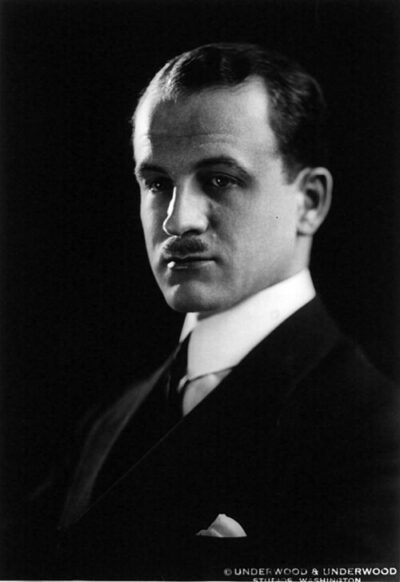
Sumner Welles
Sumner Welles was an American government official and diplomat. Born October 14, 1892, in New York City. Died September 24, 1961, in Bernardsville. Positions held include United States Ambassador to Cuba (1933). Educated at Harvard University and Harvard College.
Facts
17 facts · 2 confirmed by two sources · 5 cited · 10 from one source
Where this comes from
Papalocal keeps its own record. It started from these sources; what each one said is kept here as it was copied, so a change on their side never changes this page by itself. Tap one to read its version.
What Wikidata says · copied November 16, 2026 · revision 2567363492
- Described as
- American government official and diplomat (1892-1961)
- Other names
- Benjamin Sumner Welles, Benjamin S. Welles, Benjamin Welles, Summer Welles
- Born
- October 14, 1892 · 6 references
- Died
- September 24, 1961 · 6 references
- Born in
- New York City · 1 reference
- Died in
- Bernardsville
- Buried in
- Rock Creek Cemetery
- Citizen of
- United States
- Occupation
- diplomat · 1 reference; non-fiction writer; politician · 2 references
- Positions held
- United States Ambassador to Cuba (1933)
- Education
- Harvard University; Harvard College
- Member of
- American Academy of Arts and Sciences
- Spouse
- Mathilde Townsend (1925–); Esther Hunt Slater (1915–1923) · 1 reference; Harriet Appleton Post
- Father
- Benjamin Welles · 1 reference
- Wikipedias with a page
- 20
Wikidata item Q1234032 (wikidata.org/wiki/Q1234032), public domain (CC0). Copied November 16, 2026.
What Wikipedia says · copied November 16, 2026 · revision 1371125322
Benjamin Sumner Welles III (October 14, 1892 – September 24, 1961) was an American government official and diplomat. He was a major foreign policy adviser to President Franklin D. Roosevelt and served as Under Secretary of State from 1937 to 1943, during Roosevelt's presidency.
Born in New York City to a wealthy, well-connected political family, Welles graduated from Harvard College in 1914. He entered the Foreign Service at the advice of Franklin Roosevelt, who was a family friend. Welles was excited by Woodrow Wilson's ideas about how American principles could reorder the international system based on liberal democracy, free-trade capitalism, international law, a league of nations, and an end to colonialism.
Welles specialized in Latin American diplomatic affairs and served several posts in Washington and in the field. President Calvin Coolidge distrusted Welles because of his divorce, and dismissed him from the foreign service. Welles left public service for some years, and wrote a book on the history of the Dominican Republic.
When Roosevelt was elected president in 1932, he put Welles in charge of Latin American affairs as Assistant Secretary of State for Latin American Affairs. Welles became heavily involved in negotiations that removed Cuban president Gerardo Machado from power and replaced him with rival Carlos Manuel de Céspedes y Quesada. He was later promoted to Under Secretary of State, in which role he continued to be active in Latin American issues, but also expanded into European affairs as World War II began in Europe in 1939. In 1940, he issued the Welles Declaration which condemned Soviet occupation of the Baltic states and proved to be a minor point of contention among the Soviets and their Western allies once the U.S. entered the war in 1941. After the fall of France, he downgraded French affairs because they no longer were a major power. Roosevelt relied on Welles much more than on the official Secretary of State, Cordell Hull, who became the enemy of Welles.
Welles was forced out of government service by Secretary Hull after his enemies began to spread word of a 1943 incident in which he had propositioned two male railroad porters for sex. Returning to private life, he continued to write books on foreign relations and became an advisor to media organizations. He was a target of the House Un-American Activities Committee during the post-war "red scare", though he was never formally sanctioned. He died in New Jersey in 1961, survived by his third wife and two children from his first marriage.
- Born, in its opening lines
- October 14, 1892
- Died, in its opening lines
- September 24, 1961
From the Wikipedia article “Sumner Welles” (en.wikipedia.org/wiki/Sumner_Welles), by its contributors, under CC BY-SA 4.0 (creativecommons.org/licenses/by-sa/4.0/). Copied November 16, 2026; not changed.
Confirmed Two sources agree. Cited One source, and it names where it got it. One source One source, without a reference of its own. Sources disagree The sources disagree. We show the best-supported value and keep theirs below.
