
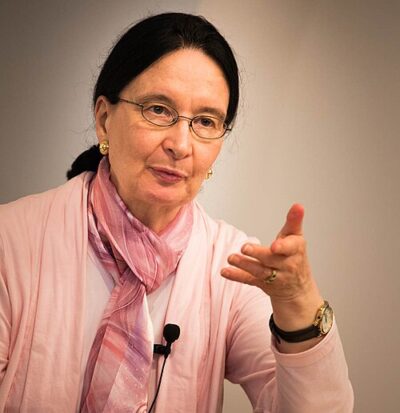
Susan Haack
Susan Haack was an English professor of philosophy and law. Born July 23, 1945, in England. Died March 10, 2026, in Miami. Educated at University of Cambridge. Awards include Fellow of the Committee for Skeptical Inquiry.
Facts
13 facts · 2 confirmed by two sources · 3 cited · 8 from one source
Where this comes from
Papalocal keeps its own record. It started from these sources; what each one said is kept here as it was copied, so a change on their side never changes this page by itself. Tap one to read its version.
What Wikidata says · copied November 17, 2026 · revision 2569365428
- Described as
- English professor of philosophy and law
- Born
- July 23, 1945 · 1 reference
- Died
- March 10, 2026 · 2 references
- Born in
- England
- Died in
- Miami · 1 reference
- Citizen of
- United Kingdom
- Occupation
- university teacher; philosopher of language; philosopher · 1 reference
- Worked for
- University of Warwick; University of Miami
- Education
- University of Cambridge
- Awards
- Fellow of the Committee for Skeptical Inquiry
- Field
- logic · 1 reference
- Wikipedias with a page
- 25
Wikidata item Q3173010 (wikidata.org/wiki/Q3173010), public domain (CC0). Copied November 17, 2026.
What Wikipedia says · copied November 17, 2026 · revision 1385803681
Susan Haack (; 23 July 1945 – 10 March 2026) was a British philosopher and academic who was a distinguished professor in the humanities, Cooper Senior Scholar in Arts and Sciences, professor of philosophy, and professor of law at the University of Miami in Coral Gables, Florida.
Haack wrote on logic, the philosophy of language, epistemology, and metaphysics. Her pragmatism followed that of Charles Sanders Peirce.
- Born, in its opening lines
- July 23, 1945
- Died, in its opening lines
- March 10, 2026
From the Wikipedia article “Susan Haack” (en.wikipedia.org/wiki/Susan_Haack), by its contributors, under CC BY-SA 4.0 (creativecommons.org/licenses/by-sa/4.0/). Copied November 17, 2026; not changed.
Confirmed Two sources agree. Cited One source, and it names where it got it. One source One source, without a reference of its own. Sources disagree The sources disagree. We show the best-supported value and keep theirs below.
