
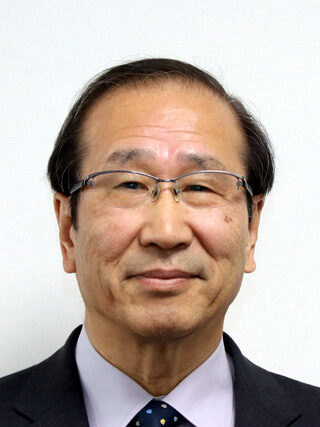
Susumu Kitagawa
Susumu Kitagawa is a Japanese chemist. Born July 4, 1951, in Kyoto. Educated at Kyoto University. Awards include De Gennes Prize, Clarivate Citation Laureates and Nobel Prize in Chemistry.
Facts
14 facts · 1 confirmed by two sources · 7 cited · 6 from one source
Where this comes from
Papalocal keeps its own record. It started from these sources; what each one said is kept here as it was copied, so a change on their side never changes this page by itself. Tap one to read its version.
What Wikidata says · copied November 16, 2026 · revision 2565697110
- Described as
- Japanese chemist
- Other names
- Kitagawa Susumu
- Born
- July 4, 1951 · 1 reference
- Born in
- Kyoto · 1 reference
- Citizen of
- Japan
- Occupation
- chemist · 1 reference; university teacher
- Worked for
- Kyoto University
- Education
- Kyoto University
- Awards
- De Gennes Prize (2013) · 1 reference; Clarivate Citation Laureates (2010) · 1 reference; Nobel Prize in Chemistry (2025) · 2 references; Order of Culture (2025) · 1 reference; Ernest Solvay Prize (2017) · 1 reference
- Field
- chemistry · 1 reference
- Website
- http://www.kitagawa.icems.kyoto-u.ac.jp/?lang=en · 1 reference
- Wikipedias with a page
- 45
Wikidata item Q11401680 (wikidata.org/wiki/Q11401680), public domain (CC0). Copied November 16, 2026.
What Wikipedia says · copied November 16, 2026 · revision 1351199256
Susumu Kitagawa (北川 進, Kitagawa Susumu; born 4 July 1951) is a Japanese Nobel Prize-winning chemist specializing in coordination chemistry, with a focus on organic–inorganic hybrid compounds and the chemical and physical properties of porous coordination polymers, particularly metal-organic frameworks. He is Distinguished Professor at Kyoto University's Institute for Integrated Cell-Material Sciences (iCeMS), which he co-founded. In 2025, he was awarded the Nobel Prize in Chemistry jointly with Richard Robson and Omar M. Yaghi.
- Born, in its opening lines
- July 4, 1951
From the Wikipedia article “Susumu Kitagawa” (en.wikipedia.org/wiki/Susumu_Kitagawa), by its contributors, under CC BY-SA 4.0 (creativecommons.org/licenses/by-sa/4.0/). Copied November 16, 2026; not changed.
Confirmed Two sources agree. Cited One source, and it names where it got it. One source One source, without a reference of its own. Sources disagree The sources disagree. We show the best-supported value and keep theirs below.
