
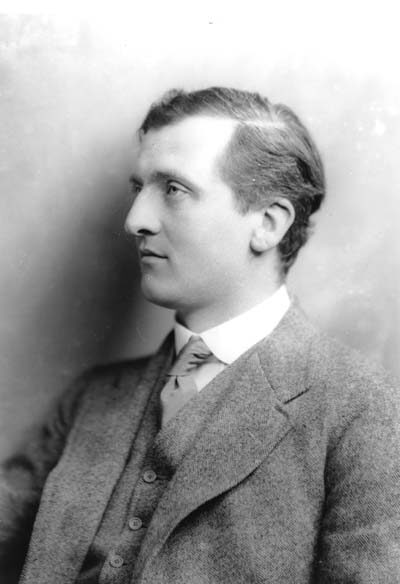
T. E. Hulme
T. E. Hulme was an English Imagist poet and critic. Born September 16, 1883, in Endon. Died September 28, 1917, in Oostduinkerke. Educated at University College London and St John's College.
Facts
16 facts · 2 confirmed by two sources · 5 cited · 9 from one source
Where this comes from
Papalocal keeps its own record. It started from these sources; what each one said is kept here as it was copied, so a change on their side never changes this page by itself. Tap one to read its version.
What Wikidata says · copied November 18, 2026 · revision 2558256184
- Described as
- English Imagist poet and critic (1883–1917)
- Other names
- Thomas Ernest Hulme
- Born
- September 16, 1883 · 8 references
- Died
- September 28, 1917 · 8 references
- Born in
- Endon · 1 reference
- Died in
- Oostduinkerke
- Citizen of
- United Kingdom of Great Britain and Ireland
- Occupation
- poet · 1 reference; literary critic; journalist · 1 reference; philosopher · 2 references; translator · 1 reference; writer · 1 reference
- Education
- University College London; St John's College; Newcastle-under-Lyme School
- Military branch
- Royal Marines; Royal Navy
- Wikipedias with a page
- 20
Wikidata item Q2624836 (wikidata.org/wiki/Q2624836), public domain (CC0). Copied November 18, 2026.
What Wikipedia says · copied November 18, 2026 · revision 1379823470
Thomas Ernest Hulme (; 16 September 1883 – 28 September 1917) was an English critic and poet who, through his writings on art, literature and politics, had a notable influence upon modernism. He was an aesthetic philosopher and the father of imagism.
- Born, in its opening lines
- September 16, 1883
- Died, in its opening lines
- September 28, 1917
From the Wikipedia article “T. E. Hulme” (en.wikipedia.org/wiki/T._E._Hulme), by its contributors, under CC BY-SA 4.0 (creativecommons.org/licenses/by-sa/4.0/). Copied November 18, 2026; not changed.
Confirmed Two sources agree. Cited One source, and it names where it got it. One source One source, without a reference of its own. Sources disagree The sources disagree. We show the best-supported value and keep theirs below.
