
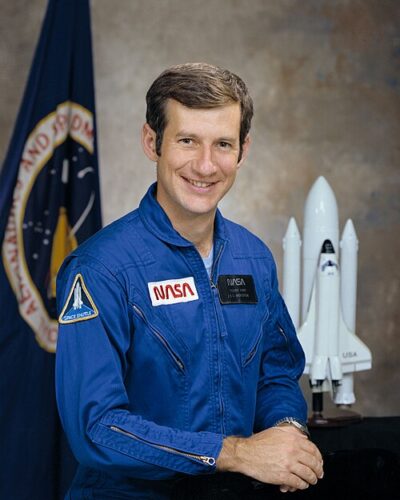
Terry Hart
Terry Hart is an American astronaut. Born October 27, 1946, in Pittsburgh. Educated at Massachusetts Institute of Technology and Rutgers University. Awards include Aviation Hall of Fame and Museum of New Jersey.
Facts
14 facts · 1 confirmed by two sources · 0 cited · 13 from one source
Where this comes from
Papalocal keeps its own record. It started from these sources; what each one said is kept here as it was copied, so a change on their side never changes this page by itself. Tap one to read its version.
What Wikidata says · copied November 16, 2026 · revision 2554003491
- Described as
- American astronaut
- Other names
- Terry Jonathan Hart
- Born
- October 27, 1946
- Born in
- Pittsburgh
- Citizen of
- United States
- Occupation
- military officer; astronaut; aircraft pilot
- Worked for
- National Aeronautics and Space Administration
- Education
- Massachusetts Institute of Technology; Rutgers University; Lehigh University; Mt. Lebanon High School
- Awards
- Aviation Hall of Fame and Museum of New Jersey
- Military branch
- United States Air Force
- Military rank
- Lieutenant Colonel
- Wikipedias with a page
- 20
Wikidata item Q720172 (wikidata.org/wiki/Q720172), public domain (CC0). Copied November 16, 2026.
What Wikipedia says · copied November 16, 2026 · revision 1378506696
Terry Jonathan Hart (born October 27, 1946) is an American mechanical and electrical engineer, a retired United States Air Force lieutenant colonel and pilot, and former NASA astronaut. Hart served as a mission specialist on the STS-41-C mission, where tasks included operation of the shuttle Remote Manipulator System (RMS) arm to deploy the Long Duration Exposure Facility (LDEF) and Solar Max satellite.
- Born, in its opening lines
- October 27, 1946
From the Wikipedia article “Terry Hart” (en.wikipedia.org/wiki/Terry_Hart), by its contributors, under CC BY-SA 4.0 (creativecommons.org/licenses/by-sa/4.0/). Copied November 16, 2026; not changed.
Confirmed Two sources agree. Cited One source, and it names where it got it. One source One source, without a reference of its own. Sources disagree The sources disagree. We show the best-supported value and keep theirs below.
