
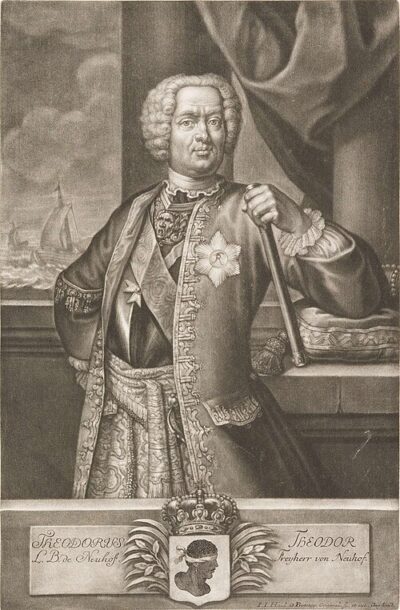
Theodore of Corsica
Theodore of Corsica was a German noble. Born August 25, 1694, in Cologne. Died December 11, 1756, in London. Positions held include king.
Facts
14 facts · 2 confirmed by two sources · 5 cited · 7 from one source
Where this comes from
Papalocal keeps its own record. It started from these sources; what each one said is kept here as it was copied, so a change on their side never changes this page by itself. Tap one to read its version.
What Wikidata says · copied November 18, 2026 · revision 2568056262
- Described as
- German noble (1694–1756)
- Other names
- Theodore I of Corsica, Theodore, Theodor Stephan Freiherr von Neuhoff, Teodoru di Neuhoff
- Born
- August 25, 1694 · 1 reference
- Died
- December 11, 1756 · 4 references
- Born in
- Cologne · 1 reference
- Died in
- London · 1 reference
- Buried in
- St Anne's Church
- Citizen of
- Holy Roman Empire
- Occupation
- adventurer · 1 reference; diplomat; military personnel · 1 reference; envoy extraordinary and minister plenipotentiary · 1 reference
- Positions held
- king
- Spouse
- Catalina Sarsfield
- Children
- Colonel Frederick; Frederick Freiherr von Neuhof · 1 reference
- Wikipedias with a page
- 23
Wikidata item Q699444 (wikidata.org/wiki/Q699444), public domain (CC0). Copied November 18, 2026.
What Wikipedia says · copied November 18, 2026 · revision 1379526204
Theodore I of Corsica (25 August 1694 – 11 December 1756), born Freiherr Theodor Stephan von Neuhoff, was a German adventurer who was briefly King of Corsica. Theodore is the subject of an opera by Giovanni Paisiello, Il re Teodoro in Venezia (1784, Vienna), and one of the six kings in Venice in Voltaire's Candide.
- Born, in its opening lines
- August 25, 1694
- Died, in its opening lines
- December 11, 1756
From the Wikipedia article “Theodore of Corsica” (en.wikipedia.org/wiki/Theodore_of_Corsica), by its contributors, under CC BY-SA 4.0 (creativecommons.org/licenses/by-sa/4.0/). Copied November 18, 2026; not changed.
Confirmed Two sources agree. Cited One source, and it names where it got it. One source One source, without a reference of its own. Sources disagree The sources disagree. We show the best-supported value and keep theirs below.
