
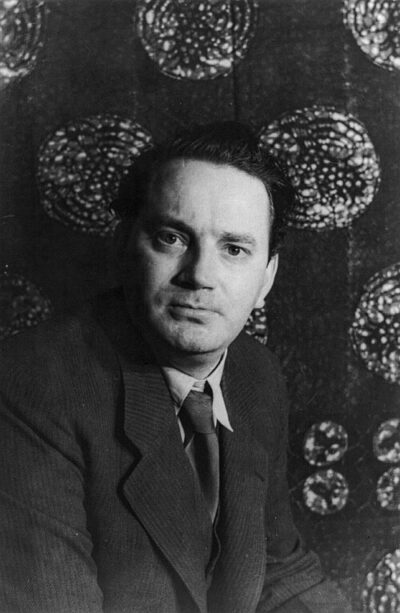
Thomas Wolfe
Thomas Wolfe was an American writer. Born October 3, 1900, in Asheville. Died September 15, 1938, in Baltimore. Known for Look Homeward, Angel. Educated at Harvard University and University of North Carolina at Chapel Hill. Awards include Guggenheim Fellowship.
Facts
21 facts · 2 confirmed by two sources · 8 cited · 11 from one source
Where this comes from
Papalocal keeps its own record. It started from these sources; what each one said is kept here as it was copied, so a change on their side never changes this page by itself. Tap one to read its version.
What Wikidata says · copied November 13, 2026 · revision 2561527226
- Described as
- American writer
- Other names
- Thomas Kennerly Wolfe, Jr., Thomas Clayton Wolfe, Tom Wolfe
- Born
- October 3, 1900 · 15 references
- Died
- September 15, 1938 · 14 references
- Born in
- Asheville · 3 references
- Died in
- Baltimore · 2 references
- Buried in
- Riverside Cemetery · 1 reference
- Cause of death
- tuberculosis
- Citizen of
- United States
- Occupation
- writer · 2 references; poet; novelist; prose writer; essayist; dramaturge; playwright · 1 reference
- Worked for
- New York University · 1 reference
- Education
- Harvard University · 1 reference; University of North Carolina at Chapel Hill · 1 reference
- Member of
- American Academy of Arts and Letters
- Known for
- Look Homeward, Angel
- Awards
- Guggenheim Fellowship (1930) · 1 reference
- Siblings
- Fred Wolfe
- Wikipedias with a page
- 60
Wikidata item Q314256 (wikidata.org/wiki/Q314256), public domain (CC0). Copied November 13, 2026.
What Wikipedia says · copied November 13, 2026 · revision 1382344798
Thomas Clayton Wolfe (October 3, 1900 – September 15, 1938) was an American novelist and short story writer. He is known largely for his first novel, Look Homeward, Angel (1929), and for the short fiction that appeared during the last years of his life. He was one of the pioneers of autobiographical fiction, and along with William Faulkner, he is considered one of the most important authors of the Southern Renaissance within the American literary canon. He has been dubbed "North Carolina's most famous writer."
Wolfe wrote four long novels as well as many short stories, dramatic works, and novellas. He is known for mixing highly original, poetic, rhapsodic, and impressionistic prose with autobiographical writing. His books, written and published from the 1920s to the 1940s, vividly reflect on the American culture and mores of that period, filtered through Wolfe's sensitive and uncomfortable perspective.
After Wolfe's death, Faulkner said that he might have been the greatest talent of their shared generation, and that he had aimed higher than any other writer. Faulkner's endorsement failed to win over mid- to late-20th century critics and Wolfe's place in the literary canon remained in question. However, 21st century academics have largely rejected this negative assessment, and a more positive and balanced assessment has emerged, combining renewed interest in his works, particularly his short fiction, with greater appreciation of his experimentation with literary forms, which has secured Wolfe a place in the literary canon.
Wolfe had great influence on Jack Kerouac, and his influence extended to other postwar authors, including Ray Bradbury and Philip Roth.
- Born, in its opening lines
- October 3, 1900
- Died, in its opening lines
- September 15, 1938
From the Wikipedia article “Thomas Wolfe” (en.wikipedia.org/wiki/Thomas_Wolfe), by its contributors, under CC BY-SA 4.0 (creativecommons.org/licenses/by-sa/4.0/). Copied November 13, 2026; not changed.
Confirmed Two sources agree. Cited One source, and it names where it got it. One source One source, without a reference of its own. Sources disagree The sources disagree. We show the best-supported value and keep theirs below.
