
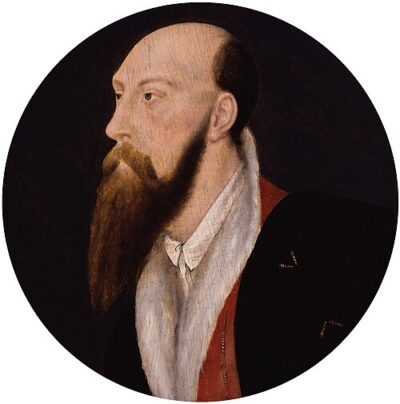
Thomas Wyatt was an English poet and diplomat. Born 1503, in Maidstone. Died October 11, 1542, in London. Positions held include Member of Parliament in the Parliament of England, Member of the 1542-44 Parliament and ambassador of the Kingdom of England to the Kingdom of Spain. Educated at St John's College.
Facts
22 facts · 2 confirmed by two sources · 8 cited · 12 from one source
Where this comes from
Papalocal keeps its own record. It started from these sources; what each one said is kept here as it was copied, so a change on their side never changes this page by itself. Tap one to read its version.
What Wikidata says · copied November 16, 2026 · revision 2565597156
- Described as
- English poet and diplomat (1503-1542)
- Other names
- Sir Thomas Wyatt
- Born
- 1503 · 16 references
- Died
- October 11, 1542
- Born in
- Maidstone · 1 reference
- Died in
- London
- Buried in
- Sherborne Abbey
- Citizen of
- Kingdom of England
- Occupation
- poet · 2 references; diplomat · 1 reference; writer · 2 references; politician; translator
- Positions held
- Member of Parliament in the Parliament of England; Member of the 1542-44 Parliament · 1 reference; ambassador of the Kingdom of England to the Kingdom of Spain
- Education
- St John's College
- Genre
- sonnet
- Spouse
- Elizabeth Brooke (1520–) · 1 reference
- Children
- Frances Wyatt · 1 reference; Thomas Wyatt · 1 reference
- Father
- Henry Wyatt
- Mother
- Anne Skinner · 1 reference
- Military rank
- admiral
- Wikipedias with a page
- 44
Wikidata item Q314325 (wikidata.org/wiki/Q314325), public domain (CC0). Copied November 16, 2026.
What Wikipedia says · copied November 16, 2026 · revision 1385883847
Sir Thomas Wyatt (1503 – 11 October 1542) was a 16th-century English politician, ambassador, and lyric poet credited with introducing the sonnet to English literature. He was born at Allington Castle near Maidstone in Kent, though his family was originally from Yorkshire. His family adopted the Lancastrian side in the Wars of the Roses. His mother was Anne Skinner, and his father Henry, who had earlier been imprisoned and tortured by Richard III, had been a Privy Councillor of Henry VII and remained a trusted adviser when Henry VIII ascended the throne in 1509.
Thomas followed his father to court after his education at St John's College, Cambridge. Entering the King's service, he was entrusted with many important diplomatic missions. In public life, his principal patron was Thomas Cromwell, after whose death he was imprisoned (1541). Though subsequently pardoned and released, shortly thereafter he died. His poems were circulated at court and may have been published anonymously in the anthology The Court of Venus (earliest edition c. 1537) during his lifetime, but were not published under his name until after his death; the first major book to feature and attribute his verse was Tottel's Miscellany (1557), printed 15 years after his death.
Notable sonnets by Thomas Wyatt include "Avising the bright beams of these fair eyes", "Farewell love and all thy laws forever", "I abide and abide and better abide", "I find no peace, and all my war is done", "My galley, charged with forgetfulness", "The long love that in my thought doth harbour", "Unstable dream, according to the place", and "Whoso list to hunt, I know where is an hind". Another famous poem by Wyatt is "They Flee from Me".
- Born, in its opening lines
- 1503
- Died, in its opening lines
- October 11, 1542
From the Wikipedia article “Thomas Wyatt (poet)” (en.wikipedia.org/wiki/Thomas_Wyatt_(poet)), by its contributors, under CC BY-SA 4.0 (creativecommons.org/licenses/by-sa/4.0/). Copied November 16, 2026; not changed.
Confirmed Two sources agree. Cited One source, and it names where it got it. One source One source, without a reference of its own. Sources disagree The sources disagree. We show the best-supported value and keep theirs below.
