
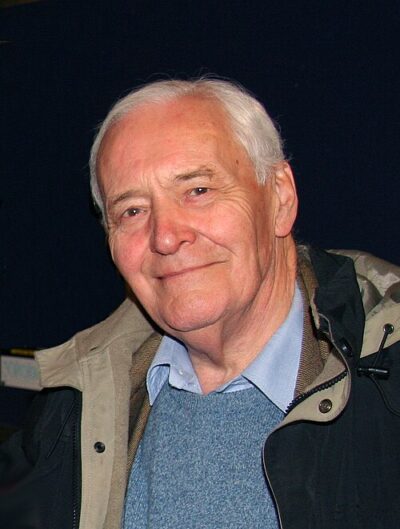
Tony Benn
Tony Benn was a British politician. Born April 3, 1925, in Marylebone. Died March 14, 2014, in London. Positions held include Secretary of State for Business, Innovation, Science and Trade (1974–1975), Minister of Technology (1966–1970) and Postmaster General of the United Kingdom (1964–1966). Educated at New College and Westminster School.
Facts
41 facts · 2 confirmed by two sources · 18 cited · 21 from one source
Where this comes from
Papalocal keeps its own record. It started from these sources; what each one said is kept here as it was copied, so a change on their side never changes this page by itself. Tap one to read its version.
What Wikidata says · copied November 16, 2026 · revision 2562973789
- Described as
- British politician (1925–2014)
- Other names
- Anthony Neil Wedgwood Benn, Viscount Stansgate, 2nd Viscount Stansgate
- Born
- April 3, 1925 · 7 references
- Died
- March 14, 2014 · 6 references
- Born in
- Marylebone · 1 reference
- Died in
- London · 2 references
- Cause of death
- chronic lymphocytic leukemia
- Citizen of
- United Kingdom; United Kingdom of Great Britain and Ireland (–1927)
- Occupation
- politician · 1 reference; autobiographer; diarist; writer · 1 reference
- Positions held
- Secretary of State for Business, Innovation, Science and Trade (1974–1975); Minister of Technology (1966–1970); Postmaster General of the United Kingdom (1964–1966); Secretary of State for Energy (1975–1979); Member of the Privy Council of the United Kingdom; member of the 52nd Parliament of the United Kingdom (1997–2001) · 1 reference; member of the 51st Parliament of the United Kingdom (1992–1997) · 1 reference; member of the 50th Parliament of the United Kingdom (1987–1992) · 1 reference; member of the 49th Parliament of the United Kingdom (1984–1987) · 1 reference; member of the 48th Parliament of the United Kingdom (1979–1983) · 1 reference; member of the 47th Parliament of the United Kingdom (1974–1979) · 1 reference; member of the 46th Parliament of the United Kingdom (1974) · 1 reference; member of the 45th Parliament of the United Kingdom (1970–1974) · 1 reference; member of the 44th Parliament of the United Kingdom (1966–1970) · 1 reference; member of the 43rd Parliament of the United Kingdom (1964–1966) · 1 reference
- Political party
- Labour Party
- Education
- New College; Westminster School · 1 reference; Central Foundation Boys' School
- Member of
- Stop the War Coalition
- Spouse
- Caroline Benn (1949–2000) · 1 reference
- Children
- Melissa Benn · 1 reference; Stephen Benn, 3rd Viscount Stansgate · 1 reference; Hilary Benn · 1 reference; Joshua William Wedgwood Benn · 1 reference
- Father
- William Wedgwood Benn, 1st Viscount Stansgate
- Mother
- Margaret Wedgwood Benn
- Military branch
- Royal Air Force
- Military rank
- pilot officer
- Website
- http://www.tonybenn.com/
- Wikipedias with a page
- 47
Wikidata item Q332412 (wikidata.org/wiki/Q332412), public domain (CC0). Copied November 16, 2026.
What Wikipedia says · copied November 16, 2026 · revision 1385493426
Anthony Neil Wedgwood Benn (3 April 1925 – 14 March 2014), known between 1960 and 1963 as The Viscount Stansgate, was a British Labour Party politician and political activist who served as a Cabinet minister in the 1960s and 1970s. He was the member of Parliament (MP) for Bristol South East and then Chesterfield for 47 of the 51 years between 1950 and 2001. He later served as President of the Stop the War Coalition from 2001 to 2014.
Benn was born in Westminster, the son of Labour cabinet minister William Wedgwood Benn, 1st Viscount Stansgate, and privately educated at Westminster School. He was elected for Bristol South East at the 1950 general election, but on his father's death in 1960, he inherited his peerage, which prevented him from continuing to serve as an MP. He fought to remain in the House of Commons and campaigned for the ability to renounce the title, a campaign which eventually succeeded with the Peerage Act 1963. He was an active member of the Fabian Society and served as chairman from 1964 to 1965. He served in Harold Wilson's Labour government, first as Postmaster General, where he oversaw the opening of the Post Office Tower, and later as Minister of Technology.
Benn served as Chairman of the National Executive Committee from 1971 to 1972 while in Opposition. In the Labour government of 1974–1979, he returned to the Cabinet as Secretary of State for Industry and subsequently served as Secretary of State for Energy. He retained that post when James Callaghan succeeded Wilson as Prime Minister. When the Labour Party was in opposition through the 1980s, he emerged as a prominent figure on the left wing of the party and unsuccessfully challenged Neil Kinnock for the Labour leadership in 1988. After leaving Parliament at the 2001 general election, Benn was President of the Stop the War Coalition until his death in 2014.
Benn was widely seen as a key proponent of democratic socialism and Christian socialism, though in regards to the latter he supported the United Kingdom becoming a secular state and ending the Church of England's status as an official church of the United Kingdom. Originally considered a moderate within the party, he was identified as belonging to its left wing after leaving ministerial office. The terms Bennism and Bennite came into usage to describe the left-wing politics he espoused from the late 1970s and its adherents. He was an influence on the political views of Jeremy Corbyn, who was elected Leader of the Labour Party a year after Benn's death, and John McDonnell, who served as Shadow Chancellor of the Exchequer under Corbyn.
- Born, in its opening lines
- April 3, 1925
- Died, in its opening lines
- March 14, 2014
From the Wikipedia article “Tony Benn” (en.wikipedia.org/wiki/Tony_Benn), by its contributors, under CC BY-SA 4.0 (creativecommons.org/licenses/by-sa/4.0/). Copied November 16, 2026; not changed.
Confirmed Two sources agree. Cited One source, and it names where it got it. One source One source, without a reference of its own. Sources disagree The sources disagree. We show the best-supported value and keep theirs below.
