
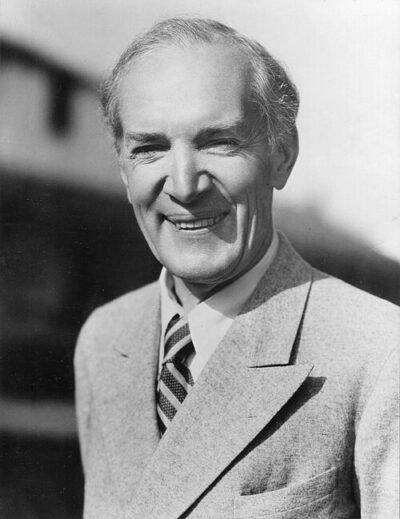
Upton Sinclair
Upton Sinclair was an American writer. Born September 20, 1878, in Baltimore. Died November 25, 1968, in Bound Brook. Known for The Jungle, King Coal and Oil!. Educated at Columbia University and City College of New York. Awards include Pulitzer Prize for the Novel.
Facts
26 facts · 2 confirmed by two sources · 6 cited · 18 from one source
Where this comes from
Papalocal keeps its own record. It started from these sources; what each one said is kept here as it was copied, so a change on their side never changes this page by itself. Tap one to read its version.
What Wikidata says · copied November 13, 2026 · revision 2564308372
- Described as
- American writer (1878–1968)
- Other names
- Arthur Stirling, Upton Sinclair Jr., Frederick Garrison, Clarke Fitch, Upton Beall Sinclair
- Born
- September 20, 1878 · 13 references
- Died
- November 25, 1968 · 14 references
- Born in
- Baltimore · 3 references
- Died in
- Bound Brook · 1 reference
- Buried in
- Rock Creek Cemetery
- Citizen of
- United States
- Occupation
- journalist; novelist; film producer; writer · 3 references; opinion journalist; dietitian; politician · 1 reference; poet · 1 reference
- Political party
- Socialist Party of America; Democratic Party
- Education
- Columbia University; City College of New York
- Member of
- American Academy of Arts and Letters
- Known for
- The Jungle; King Coal; Oil!
- Awards
- Pulitzer Prize for the Novel (1943) · 1 reference
- Spouse
- Mary Craig Sinclair
- Father
- Upton Beall Sinclair
- Mother
- Priscilla Augusta Harden · 1 reference
- Wikipedias with a page
- 73
Wikidata item Q216134 (wikidata.org/wiki/Q216134), public domain (CC0). Copied November 13, 2026.
What Wikipedia says · copied November 13, 2026 · revision 1385247474
Upton Beall Sinclair Jr. (September 20, 1878 – November 25, 1968) was an American author, muckraker journalist, and political activist, and the 1934 Democratic Party nominee for governor of California. He wrote nearly 100 books and other works in several genres. Sinclair's work was well known and popular in the first half of the 20th century, and he won the 1943 Pulitzer Prize for Fiction.
In 1906, Sinclair acquired particular fame for his novel The Jungle, which "exposed the labor and sanitary conditions in the U.S. meatpacking industry", causing a public uproar that contributed in part to the enactment a few months later of the 1906 Pure Food and Drug Act and the Meat Inspection Act. In 1919, he published The Brass Check, a muckraking exposé of American journalism that publicized the issue of journalistic malpractice in the United States. Four years after publication of The Brass Check, the first code of ethics for journalists was created. Time magazine called him "a man with every gift except humor and silence" based on his wife Mary Craig Sinclair's book Southern Belle: A Personal Story of a Crusader's Wife. He is also well remembered for the quote "It is difficult to get a man to understand something, when his salary depends upon his not understanding it." He used this line in speeches and the book about his campaign for governor as a way to explain why the editors and publishers of the major newspapers in California would not treat seriously his proposals for old age pensions and other progressive reforms. Writing during the Progressive Era, Sinclair describes the world of the industrialized United States from both the working man's and the industrialist's points of view. Novels such as King Coal (1917), The Coal War (published posthumously), Oil! (1927), and The Flivver King (1937) describe the working conditions of the coal, oil, and auto industries at the time.
The Flivver King describes the rise of Henry Ford, his "wage reform" and his company's Sociological Department, to his decline into antisemitism as publisher of The Dearborn Independent. King Coal confronts John D. Rockefeller Jr., and his role in the 1914 Ludlow Massacre in the coal fields of Colorado.
Sinclair was an outspoken socialist and ran unsuccessfully for Congress as a nominee from the Socialist Party. He was also the Democratic Party candidate for governor of California during the Great Depression, running under the banner of the End Poverty in California campaign, but was defeated in the 1934 election.
- Born, in its opening lines
- September 20, 1878
- Died, in its opening lines
- November 25, 1968
From the Wikipedia article “Upton Sinclair” (en.wikipedia.org/wiki/Upton_Sinclair), by its contributors, under CC BY-SA 4.0 (creativecommons.org/licenses/by-sa/4.0/). Copied November 13, 2026; not changed.
Confirmed Two sources agree. Cited One source, and it names where it got it. One source One source, without a reference of its own. Sources disagree The sources disagree. We show the best-supported value and keep theirs below.
