
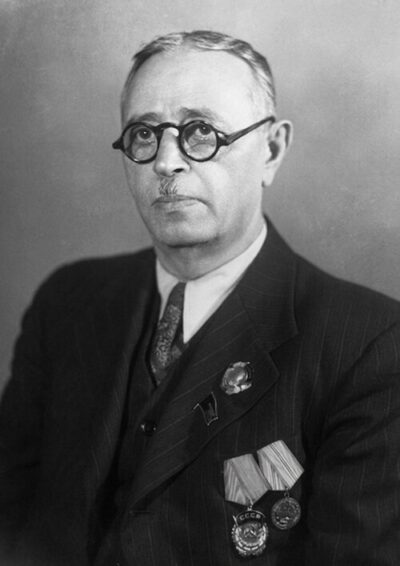
Uzeyir Hajibeyov
Uzeyir Hajibeyov was an Azerbaijani composer. Born September 18, 1885, in Aghjabadi. Died November 23, 1948, in Baku. Positions held include deputy of the Supreme Soviet of the Soviet Union. Known for Azərbaycan marşı, Leyli and Majnun and Arshin Mal Alan. Educated at Transcaucasian Teachers' Seminary. Awards include People's Artist of the USSR, People's Artist of the Azerbaijan SSR and Honored Art Worker of the Azerbaijan SSR.
Facts
49 facts · 2 confirmed by two sources · 8 cited · 39 from one source
Where this comes from
Papalocal keeps its own record. It started from these sources; what each one said is kept here as it was copied, so a change on their side never changes this page by itself. Tap one to read its version.
What Wikidata says · copied November 16, 2026 · revision 2553925638
- Described as
- Azerbaijani composer (1885–1948)
- Other names
- Uzeyir bey Abdulhuseyn bey oghlu Hajibeyov, Uzeyir bey Abdulhuseyn bey oghlu Hajibeyli, Uzeyir bey Abdul Huseyn oglu Hajibeyov
- Born
- September 18, 1885 · 1 reference
- Died
- November 23, 1948 · 5 references
- Born in
- Aghjabadi
- Died in
- Baku · 1 reference
- Buried in
- Alley of Honor
- Cause of death
- heart failure
- Citizen of
- Russian Empire; Azerbaijan Democratic Republic; Soviet Union · 1 reference
- Occupation
- conductor; composer · 2 references; music educator; writer; journalist; ethnomusicologist; playwright · 1 reference; musicologist · 2 references
- Positions held
- deputy of the Supreme Soviet of the Soviet Union
- Political party
- Communist Party of the Soviet Union (1938–1948)
- Education
- Transcaucasian Teachers' Seminary
- Member of
- Union of Soviet Composers; Composers Union of Azerbaijan; Azerbaijan National Academy of Sciences
- Genre
- opera; classical music · 1 reference; mugham · 1 reference
- Known for
- Azərbaycan marşı; Leyli and Majnun; Arshin Mal Alan; If Not That One, Then This One; Koroghlu
- Awards
- People's Artist of the USSR (1938) · 1 reference; People's Artist of the Azerbaijan SSR (1937) · 1 reference; Honored Art Worker of the Azerbaijan SSR (1936) · 1 reference; Stalin Prize, 2nd degree (2 times) (1941, 1946) · 1 reference; Order of Lenin (1938) · 1 reference; Order of the Red Banner of Labour (1945) · 1 reference; Medal "For the Defence of the Caucasus" (1944) · 1 reference; Medal "For Valiant Labour in the Great Patriotic War 1941–1945" (1945) · 1 reference
- Field
- music · 1 reference; traditional folk music · 1 reference; folkloristics · 1 reference; musicology · 1 reference
- Spouse
- Maleyke Hajibeyova (1909–1948) · 1 reference
- Father
- Mirza Abdulhuseyn bey Hajibeyov · 1 reference
- Siblings
- Jeyhoun Bey Hajibeyli; Zulfugar Hajibeyov
- Religion
- Islam
- Website
- http://www.hajibeyov.com/ · 1 reference
- Wikipedias with a page
- 52
Wikidata item Q317397 (wikidata.org/wiki/Q317397), public domain (CC0). Copied November 16, 2026.
What Wikipedia says · copied November 16, 2026 · revision 1355521850
Uzeyir bey Abdulhuseyn bey oghlu Hajibeyov (; 18 September 1885 – 23 November 1948) was an Azerbaijani composer, musicologist, and teacher. He is recognized as the father of Azerbaijani classical music. He composed the music of the national anthem of Azerbaijan Democratic Republic (which was re-adopted after Azerbaijan regained its independence from the Soviet Union in 1991). Hajibeyov also composed the anthem used by Azerbaijan during the Soviet period. He was the first composer of an opera in the Islamic world. He composed the first oriental opera Leyli and Majnun in 1908 and since then he is revered for adapting the written masterpiece to the theatre.
- Born, in its opening lines
- September 18, 1885
- Died, in its opening lines
- November 23, 1948
From the Wikipedia article “Uzeyir Hajibeyov” (en.wikipedia.org/wiki/Uzeyir_Hajibeyov), by its contributors, under CC BY-SA 4.0 (creativecommons.org/licenses/by-sa/4.0/). Copied November 16, 2026; not changed.
Confirmed Two sources agree. Cited One source, and it names where it got it. One source One source, without a reference of its own. Sources disagree The sources disagree. We show the best-supported value and keep theirs below.
