
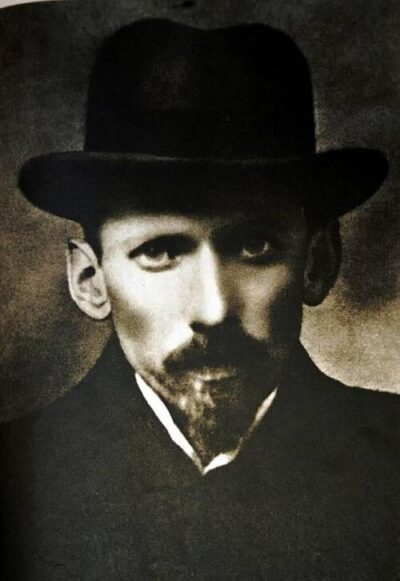
Viktor Kingissepp
Viktor Kingissepp was an Estonian communist revolutionary. Born March 24, 1888, in Kaarma-Suure Rural Municipality. Died May 4, 1922, in Tallinn. Educated at Faculty of Law, Saint Petersburg State University.
Facts
15 facts · 2 confirmed by two sources · 3 cited · 10 from one source
What’s different
- Died: we show May 4, 1922 (Confirmed). Wikidata also lists May 3, 1922
Where this comes from
Papalocal keeps its own record. It started from these sources; what each one said is kept here as it was copied, so a change on their side never changes this page by itself. Tap one to read its version.
What Wikidata says · copied November 17, 2026 · revision 2567375604
- Described as
- Estonian communist revolutionary (1888-1922)
- Other names
- Viktor Eduard Kingissepp
- Born
- March 24, 1888 · 2 references
- Died
- May 4, 1922; May 3, 1922 · 1 reference
- Born in
- Kaarma-Suure Rural Municipality
- Died in
- Tallinn · 1 reference
- Cause of death
- gunshot wound
- Citizen of
- Russian Empire; Russian Soviet Federative Socialist Republic; Estonia
- Occupation
- politician · 1 reference; revolutionary · 1 reference
- Political party
- Communist Party of the Soviet Union; Communist Party of Estonia
- Education
- Faculty of Law, Saint Petersburg State University
- Member of
- All-Russian Central Executive Committee
- Children
- Sergei Kingissepp
- Wikipedias with a page
- 24
Wikidata item Q710944 (wikidata.org/wiki/Q710944), public domain (CC0). Copied November 17, 2026.
What Wikipedia says · copied November 17, 2026 · revision 1375166585
Viktor Eduard Kingissepp (Russian: Виктор Эдуардович Кингисепп; 24 March [O.S. 12 March] 1888 – 4 May 1922) was an Estonian communist politician who was a founder and leading member of the Estonian Communist Party.
Kingissepp was born at the former manor in Marientali, now part of Kuressaare. The son of a factory worker, he joined a Marxist circle as a schoolboy in Arensburg (now Kuressaare) (which was renamed Kingissepp in 1952, but was restored to its original Estonian name in 1988), and organised the Estonian section of the Russian Social Democratic Labour Party, in St Petersburg. During the war with Germany, he was put in charge of a medical train on the Western Front. After the February revolution, he returned to Petrograd (as St Petersburg was now named), and joined the Bolsheviks and the Red Guards. After the Bolshevik Revolution, he was deputy chairman of the Estonian Revolutionary Soviet in Reval (now Tallinn), but fled back to Petrograd after Estonia was occupied by the German army. He joined the Cheka, and in August 1918 carried out the arrest of Fanny Kaplan, who had shot and attempted to kill Lenin. He returned to Estonia in November 1918 to organise the banned Estonian Communist Party, and presided over its first congress in November 1920. He was arrested by the Estonian Political Police on 3 May 1922, after a mass May Day demonstration in Tallinn, and executed that same night.
- Born, in its opening lines
- March 24, 1888
- Died, in its opening lines
- May 4, 1922
From the Wikipedia article “Viktor Kingissepp” (en.wikipedia.org/wiki/Viktor_Kingissepp), by its contributors, under CC BY-SA 4.0 (creativecommons.org/licenses/by-sa/4.0/). Copied November 17, 2026; not changed.
Confirmed Two sources agree. Cited One source, and it names where it got it. One source One source, without a reference of its own. Sources disagree The sources disagree. We show the best-supported value and keep theirs below.
