
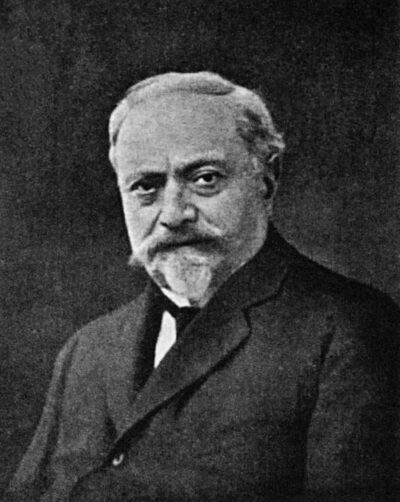
Vincenzo Cerulli
Vincenzo Cerulli was an Italian astronomer. Born April 20, 1859, in Teramo. Died May 30, 1927, in Merate. Known for discoverer of asteroids. Educated at Sapienza University of Rome.
Facts
15 facts · 2 confirmed by two sources · 4 cited · 9 from one source
What’s different
- Died: we show May 30, 1927 (Confirmed). Wikidata also lists May 31, 1927
Where this comes from
Papalocal keeps its own record. It started from these sources; what each one said is kept here as it was copied, so a change on their side never changes this page by itself. Tap one to read its version.
What Wikidata says · copied November 17, 2026 · revision 2558473797
- Described as
- Italian astronomer (1859–1927)
- Born
- April 20, 1859 · 3 references
- Died
- May 30, 1927 · 1 reference; May 31, 1927 · 1 reference
- Born in
- Teramo · 2 references
- Died in
- Merate · 2 references
- Citizen of
- Kingdom of Italy (1861–)
- Occupation
- astronomer · 1 reference
- Worked for
- Astronomical Observatory of Abruzzo
- Education
- Sapienza University of Rome
- Member of
- Accademia Nazionale delle Scienze detta dei XL; Academy of Sciences of Turin (1910–) · 1 reference; Accademia Nazionale dei Lincei (1912–) · 1 reference; International Astronomical Union
- Known for
- discoverer of asteroids
- Field
- astronomy
- Siblings
- Emidio Cerulli
- Wikipedias with a page
- 24
Wikidata item Q945443 (wikidata.org/wiki/Q945443), public domain (CC0). Copied November 17, 2026.
What Wikipedia says · copied November 17, 2026 · revision 1372004888
Vincenzo Cerulli (20 April 1859 – 30 May 1927) was an Italian astronomer and founder of the Collurania-Teramo Observatory in Teramo, central Italy, where he was born.
He earned a degree in physics from the Sapienza University of Rome in 1881, and continued his studies at the University of Berlin. Cerulli compiled a star catalog with Elia Millosevich. He was the astronomer at the Pontifical Gregorian University.
In 1890, he founded his observatory, which he named "Collurania", equipping it with a 40 cm Cooke refractor, which he had purchased for £2000 (£210,652 at the 2020 equivalent) from the son of British Astronomer, James Wigglesworth (born, Wibsey 1815) and which had been situated in Scarborough, before being dismantled and moved to Teramo. He also observed Mars and developed the theory that the Martian canals were not real but an optical illusion, a theory that was later confirmed.
He discovered one asteroid, 704 Interamnia, which is named after the Latin name for Teramo, and is notable for its relatively large diameter of approximately 350 km, which makes it the fifth largest body in the traditional asteroid belt.
Cerulli was a corresponding member of the Lincei Academy, Rome; the Pontaniana Academy, Naples; and the Academy of Sciences, Turin. He contributed the article on Lorenzo Respighi to the Catholic Encyclopedia.
Cerulli died at Merate, Province of Lecco, in 1927. The 130-kilometer Martian crater Cerulli, as well as the asteroids 366 Vincentina and 31028 Cerulli are named in his honor.
- Born, in its opening lines
- April 20, 1859
- Died, in its opening lines
- May 30, 1927
From the Wikipedia article “Vincenzo Cerulli” (en.wikipedia.org/wiki/Vincenzo_Cerulli), by its contributors, under CC BY-SA 4.0 (creativecommons.org/licenses/by-sa/4.0/). Copied November 17, 2026; not changed.
Confirmed Two sources agree. Cited One source, and it names where it got it. One source One source, without a reference of its own. Sources disagree The sources disagree. We show the best-supported value and keep theirs below.
