
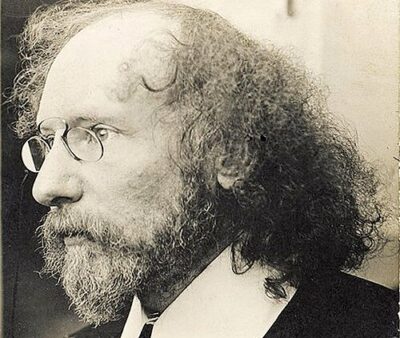
Vyacheslav Ivanov
Vyacheslav Ivanov was a Russian poet, playwright, theatre theorist, translator. Born February 28, 1866, in Moscow. Died July 16, 1949, in Rome. Educated at Faculty of History and Philology of Moscow University and First Moscow gymnasium.
Facts
28 facts · 2 confirmed by two sources · 5 cited · 21 from one source
What’s different
- Born: we show February 28, 1866 (Confirmed). Wikidata also lists February 16, 1866
Where this comes from
Papalocal keeps its own record. It started from these sources; what each one said is kept here as it was copied, so a change on their side never changes this page by itself. Tap one to read its version.
What Wikidata says · copied November 16, 2026 · revision 2570391168
- Described as
- Russian poet, playwright, theatre theorist, translator (1866–1949)
- Other names
- Vyacheslav Ivanovich Ivanov
- Born
- February 16, 1866 · 4 references; February 28, 1866 · 2 references
- Died
- July 16, 1949 · 12 references
- Born in
- Moscow · 4 references
- Died in
- Rome · 4 references
- Buried in
- Protestant Cemetery, Rome
- Citizen of
- Russian Empire; Russian Soviet Federative Socialist Republic; Azerbaijan Soviet Socialist Republic; Italy (1946–)
- Occupation
- playwright; philosopher; poet; writer · 1 reference; literary critic; classical scholar; translator; essayist
- Worked for
- Baku State University; Pontifical Oriental Institute; Collegium Russicum
- Education
- Faculty of History and Philology of Moscow University · 1 reference; First Moscow gymnasium
- Genre
- poetry; opinion journalism · 1 reference; essay · 1 reference
- Spouse
- Lydia Zinovieva-Annibal (1898–1907) · 1 reference
- Children
- Jean Neuvecelle
- Religion
- Catholic Church
- Wikipedias with a page
- 42
Wikidata item Q361318 (wikidata.org/wiki/Q361318), public domain (CC0). Copied November 16, 2026.
What Wikipedia says · copied November 16, 2026 · revision 1375167330
Vyacheslav Ivanovich Ivanov (Russian: Вячесла́в Ива́нович Ива́нов, Italian: Venceslao Ivanov; 28 February [O.S. 16 February] 1866 – 16 July 1949) was a Russian poet, playwright, Classicist, and senior literary and dramatic theorist of the Russian Symbolist movement. He was also a philosopher, translator, and literary critic.
Born into the lower Russian nobility, the multilingual Ivanov studied Classics, philology, and philosophy. He married the sister of a school friend and aspired to live as a conventional family man, until he discovered the philosophy of Friedrich Nietzsche while in Rome. Following a surrender to their mutual attraction one night in the Colosseum, Ivanov left his wife and daughter for married Russian poet Lydia Zinovieva-Annibal. Following their Orthodox ecclesiastical divorces and clandestine remarriage in a Greek Orthodox ceremony at Livorno, Ivanov and Zinovieva-Annibal returned to their homeland and plunged headfirst into Tsarist Russia's literary bohemia.
For most of the remaining years of the Pre-1917 Silver Age of Russian Poetry, Ivanov presided over a weekly literary salon near the Tauride Palace in St. Petersburg. He helped discover the poet Anna Akhmatova and served as a highly influential teacher and mentor to philosopher Nikolai Berdyaev, Symbolist poet and future Russian Orthodox martyr Maria Skobtsova, and Nobel Prize-winning poet and novelist Boris Pasternak.
Similarly to his contemporaries Hugo von Hofmannsthal and Max Reinhardt in the Germanosphere, Ivanov was an influential avant garde dramatic theorist and sought, under the influence of Ancient Greek, Medieval, and Spanish Golden Age theatre, to blur and even to erase the fourth wall and make the audience into participants in the dramas they attended. The innovative theatre director Vsevolod Meyerhold is only one of those who has been influenced by Ivanov's dramatic philosophy.
Following the First World War, the October Revolution, the Russian Civil War, and his 1924 emigration from the Soviet Union to Fascist Italy, Ivanov converted in 1926 to the Russian Greek Catholic Church, which remains one of the smallest of the Eastern Catholic Churches. Ivanov had previously lived a life so hedonistic that he later compared his conversion in a work of Russian poetry to that of St. Augustine.
In 1931, Ivanov successfully defended Christianity in a public debate against Benedetto Croce, which enormously bolstered his intellectual reputation in the West. Ivanov spent the remainder of his life in Rome as a professor at both the Pontifical Oriental Institute and the Russicum, where his students included future Martyrs and confessors under Stalinism Bishop Theodore Romzha, Fr. Pietro Leoni, and Fr. Walter Ciszek. His close friends as a refugee included Martin Buber, Sir Isaiah Berlin, Sir Maurice Bowra, and Charles Du Bos.
Since his death in 1949, Ivanov's writing has been praised and referenced by Pope John Paul II, who often referenced Ivanov's metaphor about Roman and Byzantine Christianity representing the two lungs of Christendom. Furthermore, after decades of his writings being banned by government censorship in his homeland, Ivanov has witnessed a great revival of interest since the collapse of the Soviet Union in 1991.
- Born, in its opening lines
- February 28, 1866
- Died, in its opening lines
- July 16, 1949
From the Wikipedia article “Vyacheslav Ivanov (poet)” (en.wikipedia.org/wiki/Vyacheslav_Ivanov_(poet)), by its contributors, under CC BY-SA 4.0 (creativecommons.org/licenses/by-sa/4.0/). Copied November 16, 2026; not changed.
Confirmed Two sources agree. Cited One source, and it names where it got it. One source One source, without a reference of its own. Sources disagree The sources disagree. We show the best-supported value and keep theirs below.
