
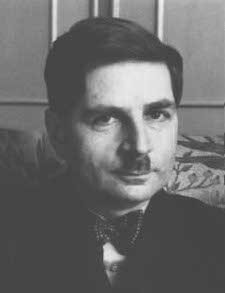
Walter H. Schottky
Walter H. Schottky was a German physicist. Born July 23, 1886, in Zurich. Died March 4, 1976, in Forchheim. Educated at Frederick William University Berlin and University of Würzburg. Awards include Werner von Siemens Ring, Hughes Medal and Carl Friedrich Gauss Medal.
Facts
31 facts · 2 confirmed by two sources · 15 cited · 14 from one source
Where this comes from
Papalocal keeps its own record. It started from these sources; what each one said is kept here as it was copied, so a change on their side never changes this page by itself. Tap one to read its version.
What Wikidata says · copied November 16, 2026 · revision 2569061557
- Described as
- German physicist (1886–1976)
- Other names
- Walter Schottky, Walter Hermann Schottky, Walter Hans Schottky
- Born
- July 23, 1886 · 3 references
- Died
- March 4, 1976 · 4 references
- Born in
- Zurich · 1 reference
- Died in
- Forchheim · 1 reference
- Buried in
- Pretzfeld · 1 reference
- Citizen of
- West Germany; German Reich
- Occupation
- physicist · 1 reference; inventor; university teacher; engineer; electrotechnician · 1 reference
- Worked for
- University of Rostock (1923–1927); University of Würzburg (1919–1923) · 1 reference; University of Jena (1912–1914) · 1 reference; Siemens (2 times) (1914–1958) · 1 reference
- Education
- Frederick William University Berlin; University of Würzburg · 1 reference
- Awards
- Werner von Siemens Ring (1965) · 1 reference; Hughes Medal (1936) · 1 reference; Carl Friedrich Gauss Medal (1962) · 1 reference; Honorary doctor of the Technical University of Berlin (1960) · 1 reference; honorary doctor of ETH Zürich (1960) · 1 reference
- Field
- solid-state physics; physics · 1 reference; electrical engineering · 1 reference; electronics · 1 reference; semiconductor · 1 reference; electron emission · 1 reference
- Father
- Friedrich Schottky
- Siblings
- Ernst Max Schottky
- Wikipedias with a page
- 34
Wikidata item Q60347 (wikidata.org/wiki/Q60347), public domain (CC0). Copied November 16, 2026.
What Wikipedia says · copied November 16, 2026 · revision 1372006809
Walter Schottky (German: [ˈvaltɐ ˈʃɔtki]; 23 July 1886 – 4 March 1976) was a German physicist and electrical engineer who played a major early role in developing the theory of thermionic emission, invented the screen-grid vacuum tube in 1915, co-invented the ribbon microphone and ribbon loudspeaker along with Erwin Gerlach in 1924, and later made many significant contributions in the areas of semiconductor devices, technical physics, and technology.
The Schottky effect (a thermionic emission; important for vacuum tube technology), the Schottky diode (where the depletion layer occurring in it is called the Schottky barrier), the Schottky vacancies (or Schottky defects), the Schottky anomaly (a peak value of the heat capacity), and the Mott–Schottky equation (also Langmuir–Schottky space charge law) are named after him. He conducted research on electrical noise mechanisms (shot noise), space charge, especially in electron tubes, and the barrier layer in semiconductors, which were important for the development of copper oxide rectifiers and transistors.
- Born, in its opening lines
- July 23, 1886
- Died, in its opening lines
- March 4, 1976
From the Wikipedia article “Walter Schottky” (en.wikipedia.org/wiki/Walter_Schottky), by its contributors, under CC BY-SA 4.0 (creativecommons.org/licenses/by-sa/4.0/). Copied November 16, 2026; not changed.
Confirmed Two sources agree. Cited One source, and it names where it got it. One source One source, without a reference of its own. Sources disagree The sources disagree. We show the best-supported value and keep theirs below.
