
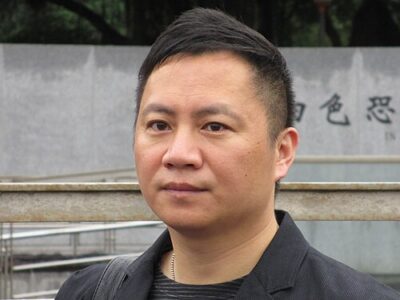
Wang Dan is a Chinese protester. Born February 26, 1969, in Beijing. Educated at Peking University and Harvard University. Awards include Reebok Human Rights Award.
Facts
11 facts · 1 confirmed by two sources · 1 cited · 9 from one source
Where this comes from
Papalocal keeps its own record. It started from these sources; what each one said is kept here as it was copied, so a change on their side never changes this page by itself. Tap one to read its version.
What Wikidata says · copied November 18, 2026 · revision 2558277800
- Described as
- Chinese protester
- Other names
- Dan Wang
- Born
- February 26, 1969 · 1 reference
- Born in
- Beijing
- Citizen of
- People's Republic of China (1969–1998) · 1 reference; statelessness (1998–) · 1 reference
- Occupation
- human rights defender
- Worked for
- National Chengchi University; National Tsing Hua University · 1 reference
- Education
- Peking University; Harvard University
- Awards
- Reebok Human Rights Award (1989)
- Website
- http://www.wangdan1989.com/
- Wikipedias with a page
- 23
Wikidata item Q610054 (wikidata.org/wiki/Q610054), public domain (CC0). Copied November 18, 2026.
What Wikipedia says · copied November 18, 2026 · revision 1365710757
Wang Dan (Chinese: 王丹; born 26 February 1969) is a Chinese political activist and history scholar. He rose to prominence while studying at Peking University as one of the student leaders in the Tiananmen Square protests of 1989, after which he was twice jailed by the Chinese government. He went into exile in the United States in 1998 and, after earning a PhD from Harvard University, divided his time between Taiwan, where he taught at several universities, and the United States.
- Born, in its opening lines
- February 26, 1969
From the Wikipedia article “Wang Dan (dissident)” (en.wikipedia.org/wiki/Wang_Dan_(dissident)), by its contributors, under CC BY-SA 4.0 (creativecommons.org/licenses/by-sa/4.0/). Copied November 18, 2026; not changed.
Confirmed Two sources agree. Cited One source, and it names where it got it. One source One source, without a reference of its own. Sources disagree The sources disagree. We show the best-supported value and keep theirs below.
