
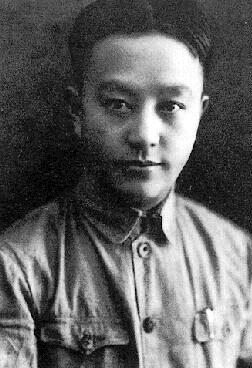
Wang Ming
Wang Ming was a Chinese politician. Born May 23, 1904, in Jinzhai County. Died March 27, 1974, in Moscow. Positions held include General Secretary of the Chinese Communist Party (1931–1932), member of the National Committee of the Chinese People's Political Consultative Conference and member of the 1st Plenary Session of the Chinese People's Political Consultative Conference. Educated at Moscow Sun Yat-sen University. Awards include Fukuoka Asian Culture Prize.
Facts
17 facts · 2 confirmed by two sources · 0 cited · 15 from one source
What’s different
- Born: we show May 23, 1904 (Confirmed). Wikidata also lists May 3, 1904
Where this comes from
Papalocal keeps its own record. It started from these sources; what each one said is kept here as it was copied, so a change on their side never changes this page by itself. Tap one to read its version.
What Wikidata says · copied November 17, 2026 · revision 2553975133
- Described as
- Chinese politician (1904-1974)
- Other names
- Chen Shaoyu, 陳紹禹, 陈绍禹
- Born
- May 3, 1904; May 23, 1904
- Died
- March 27, 1974 · 1 reference
- Born in
- Jinzhai County
- Died in
- Moscow
- Buried in
- Novodevichy Cemetery
- Citizen of
- People's Republic of China (1949–); Republic of China
- Occupation
- politician
- Positions held
- General Secretary of the Chinese Communist Party (1931–1932); member of the National Committee of the Chinese People's Political Consultative Conference; member of the 1st Plenary Session of the Chinese People's Political Consultative Conference; member of the National Political Assembly; member of the Politburo Standing Committee of the Chinese Communist Party (1931–1938)
- Political party
- Chinese Communist Party
- Education
- Moscow Sun Yat-sen University
- Member of
- 28 Bolsheviks
- Awards
- Fukuoka Asian Culture Prize (2017)
- Wikipedias with a page
- 24
Wikidata item Q699327 (wikidata.org/wiki/Q699327), public domain (CC0). Copied November 17, 2026.
What Wikipedia says · copied November 17, 2026 · revision 1382550453
Wang Ming (Chinese: 王明; pinyin: Wáng Míng; May 23, 1904 – March 27, 1974) was a Chinese politician and senior leader of the early Chinese Communist Party (CCP). He led the CCP delegation to the Communist International (Comintern) from 1931 to 1937. After returning to China, he came into conflict with Mao Zedong.
From 1925 to 1929, Wang studied at the Moscow Sun Yat-sen University, where he was a supporter of Joseph Stalin's during the Soviet Union's leadership struggles. After returning to China, he was briefly purged by Li Lisan's faction before being fully reinstated in late 1930. In January 1931, he was promoted to the Politburo and rose rapidly in importance during a time of high attrition in the CCP's top leadership due to purges, arrests, and flights into hiding.
Wang became the CCP's leading representative to the Comintern and left for Moscow in October 1931. In that role, he helped promote the idea of an alliance between the CCP and the Kuomintang (KMT) to resist Japanese imperialism, which eventually came to fruition as the Second United Front. After he returned to China in 1937, Wang vocally opposed what he saw as Mao's "nationalist deviation" from orthodox Marxism–Leninism. According to Mao, Wang epitomized the intellectualism and foreign dogmatism that Mao criticized in his essays On Practice and On Contradiction.
- Born, in its opening lines
- May 23, 1904
- Died, in its opening lines
- March 27, 1974
From the Wikipedia article “Wang Ming” (en.wikipedia.org/wiki/Wang_Ming), by its contributors, under CC BY-SA 4.0 (creativecommons.org/licenses/by-sa/4.0/). Copied November 17, 2026; not changed.
Confirmed Two sources agree. Cited One source, and it names where it got it. One source One source, without a reference of its own. Sources disagree The sources disagree. We show the best-supported value and keep theirs below.
