
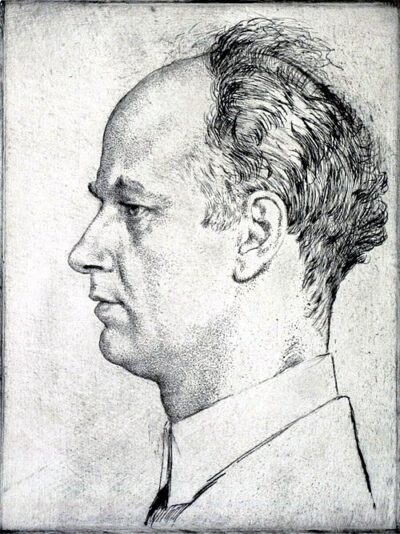
Wilhelm Furtwängler
Wilhelm Furtwängler was a German conductor and composer. Born January 25, 1886, in Schöneberg. Died November 30, 1954, in Ebersteinburg. Positions held include Geheimrat. Awards include Pour le Mérite for Sciences and Arts order, Knight Commander's Cross of the Order of Merit of the Federal Republic of Germany and Knight of the Legion of Honour.
Facts
36 facts · 2 confirmed by two sources · 13 cited · 21 from one source
Where this comes from
Papalocal keeps its own record. It started from these sources; what each one said is kept here as it was copied, so a change on their side never changes this page by itself. Tap one to read its version.
What Wikidata says · copied November 16, 2026 · revision 2569159201
- Described as
- German conductor and composer (1886–1954)
- Other names
- Gustav Heinrich Ernst Martin Wilhelm Furtwängler, Furtwängler
- Born
- January 25, 1886 · 14 references
- Died
- November 30, 1954 · 13 references
- Born in
- Schöneberg · 1 reference
- Died in
- Ebersteinburg · 1 reference
- Buried in
- Bergfriedhof · 1 reference
- Cause of death
- pneumonia
- Name at birth
- Gustav Heinrich Ernst Martin Wilhelm Furtwängler
- Citizen of
- Germany
- Occupation
- classical composer; conductor · 1 reference; composer · 2 references; choir director · 1 reference; Staatsrat · 1 reference; chapelmaster · 1 reference; opera director · 1 reference; general music director · 1 reference
- Positions held
- Geheimrat
- Member of
- Bavarian Academy of Fine Arts; Berlin Philharmonic
- Genre
- symphony
- Instrument
- piano
- Record label
- EMI
- Awards
- Pour le Mérite for Sciences and Arts order; Knight Commander's Cross of the Order of Merit of the Federal Republic of Germany (1952) · 1 reference; Knight of the Legion of Honour; Goethe Medal for Art and Science (1932); Pour le Mérite · 1 reference; Commemorative Medal of the Society for the Promotion of Charitable Activities in Gold (1935) · 1 reference
- Field
- classical music · 1 reference
- Spouse
- Elisabeth Furtwängler
- Children
- Andreas Furtwängler; Dagmar Bellová; Friederike Kunz · 1 reference
- Father
- Adolf Furtwängler · 1 reference
- Mother
- Adelheid Furtwängler · 1 reference
- Siblings
- Walter Furtwängler
- Wikipedias with a page
- 49
Wikidata item Q57285 (wikidata.org/wiki/Q57285), public domain (CC0). Copied November 16, 2026.
What Wikipedia says · copied November 16, 2026 · revision 1380168622
Gustav Heinrich Ernst Martin Wilhelm Furtwängler (UK: FOORT-veng-glər, US: -lər; German: [ˈvɪlhɛlm ˈfʊɐ̯tvɛŋlɐ] ; 25 January 1886 – 30 November 1954) was a German conductor and composer. He is regarded as one of the greatest symphonic and operatic conductors of the 20th century. He was a major influence for many later conductors, and his name is often mentioned when discussing their interpretative styles.
Furtwängler was principal conductor of the Berlin Philharmonic between 1922 and 1945, and from 1952 until 1954. He was also principal conductor of the Gewandhaus Orchestra (1922–26), and was a guest conductor of other major orchestras including the Vienna Philharmonic.
Although not an adherent of Nazism, he was the foremost conductor to remain in Germany during the Nazi era. Despite his open opposition to antisemitism and the ubiquity of Nazi symbolism, the regime did not seek to suppress him, at Joseph Goebbels' insistence, for propaganda reasons. This situation caused lasting controversy, and the extent to which his presence lent prestige to Nazi Germany is still debated.
- Born, in its opening lines
- January 25, 1886
- Died, in its opening lines
- November 30, 1954
From the Wikipedia article “Wilhelm Furtwängler” (en.wikipedia.org/wiki/Wilhelm_Furtwängler), by its contributors, under CC BY-SA 4.0 (creativecommons.org/licenses/by-sa/4.0/). Copied November 16, 2026; not changed.
Confirmed Two sources agree. Cited One source, and it names where it got it. One source One source, without a reference of its own. Sources disagree The sources disagree. We show the best-supported value and keep theirs below.
