
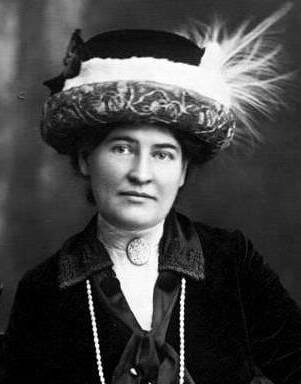
Willa Cather
Willa Cather was an American writer. Born December 7, 1873, in Gore. Died April 24, 1947, in Manhattan. Known for Alexander's Bridge, O Pioneers! and The Song of the Lark. Educated at University of Nebraska–Lincoln. Awards include National Women's Hall of Fame, Pulitzer Prize for the Novel and National Cowgirl Museum and Hall of Fame.
Facts
38 facts · 2 confirmed by two sources · 9 cited · 27 from one source
Where this comes from
Papalocal keeps its own record. It started from these sources; what each one said is kept here as it was copied, so a change on their side never changes this page by itself. Tap one to read its version.
What Wikidata says · copied November 13, 2026 · revision 2568416024
- Described as
- American writer (1873–1947)
- Other names
- Wilella Sibert “Willa” Cather, Willa Sibert Cather, Wilella Sibert Cather
- Born
- December 7, 1873 · 13 references
- Died
- April 24, 1947 · 14 references
- Born in
- Gore · 3 references
- Died in
- Manhattan · 1 reference
- Buried in
- Old Burying Ground · 1 reference
- Cause of death
- cerebral hemorrhage
- Citizen of
- United States
- Occupation
- writer · 5 references; poet; novelist · 1 reference; journalist · 1 reference; essayist; biographer; magazine writer
- Education
- University of Nebraska–Lincoln
- Member of
- American Academy of Arts and Sciences; American Academy of Arts and Letters; PEN America; American Philosophical Society (1934–)
- Known for
- Alexander's Bridge; O Pioneers!; The Song of the Lark; My Ántonia; One of Ours; A Lost Lady; The Professor's House; My Mortal Enemy; Death Comes for the Archbishop; Shadows on the Rock
- Awards
- National Women's Hall of Fame (1988) · 1 reference; Pulitzer Prize for the Novel (1923) · 1 reference; National Cowgirl Museum and Hall of Fame; Fellow of the American Academy of Arts and Sciences; William Dean Howells Medal of the American Academy of Arts and Letters (1930)
- Lived in
- Red Cloud · 1 reference; Willow Shade · 1 reference; Park Avenue · 1 reference; Willa Cather House · 1 reference
- Wikipedias with a page
- 65
Wikidata item Q229480 (wikidata.org/wiki/Q229480), public domain (CC0). Copied November 13, 2026.
What Wikipedia says · copied November 13, 2026 · revision 1384548649
Willa Sibert Cather (; born Wilella Sibert Cather; December 7, 1873 – April 24, 1947) was an American writer known for her novels of life on the Great Plains, including O Pioneers!, The Song of the Lark, and My Ántonia. In 1923, she was awarded the Pulitzer Prize for One of Ours, a novel set during World War I.
Willa Cather and her family moved from Virginia to Webster County, Nebraska, when she was nine years old. The family later settled as Homesteaders in the town of Red Cloud. Shortly after graduating from the University of Nebraska, Cather moved to Pittsburgh for 10 years, supporting herself as a magazine editor and high school English teacher. At the age of 33, she moved to New York City, her primary home for the rest of her life, though she also traveled widely and spent considerable time at her summer residence on Grand Manan Island, New Brunswick. She spent the last 39 years of her life with her domestic partner, Edith Lewis, before being diagnosed with breast cancer and dying of a cerebral hemorrhage. Cather and Lewis are buried together in Jaffrey, New Hampshire.
Cather achieved recognition as a novelist of the frontier and pioneer experience. She wrote of the spirit of those settlers moving into the western states, many of them European immigrants in the 19th century. Common themes in her work include nostalgia and exile. A sense of place is an important element in her fiction: landscapes and domestic spaces become dynamic presences, against which her characters struggle and find community.
- Born, in its opening lines
- December 7, 1873
- Died, in its opening lines
- April 24, 1947
From the Wikipedia article “Willa Cather” (en.wikipedia.org/wiki/Willa_Cather), by its contributors, under CC BY-SA 4.0 (creativecommons.org/licenses/by-sa/4.0/). Copied November 13, 2026; not changed.
Confirmed Two sources agree. Cited One source, and it names where it got it. One source One source, without a reference of its own. Sources disagree The sources disagree. We show the best-supported value and keep theirs below.
