
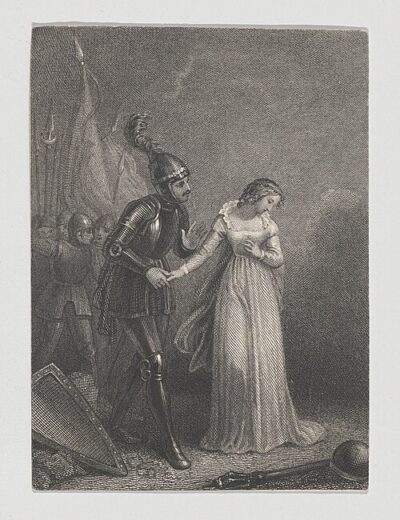
William de la Pole, 1st Duke of Suffolk
William de la Pole, 1st Duke of Suffolk was the 15th-century English noble. Born October 16, 1396, in Suffolk. Died May 2, 1450, in English Channel. Positions held include Lord High Admiral (1447–1450). Awards include Knight of the Garter.
Facts
19 facts · 2 confirmed by two sources · 3 cited · 14 from one source
Where this comes from
Papalocal keeps its own record. It started from these sources; what each one said is kept here as it was copied, so a change on their side never changes this page by itself. Tap one to read its version.
What Wikidata says · copied November 18, 2026 · revision 2563839562
- Described as
- 15th-century English noble
- Born
- October 16, 1396
- Died
- May 2, 1450
- Born in
- Suffolk
- Died in
- English Channel
- Cause of death
- decapitation
- Citizen of
- Kingdom of England
- Occupation
- military personnel
- Positions held
- Lord High Admiral (1447–1450)
- Member of
- Order of the Garter (1421–)
- Awards
- Knight of the Garter (1421) · 1 reference
- Spouse
- Alice de la Pole (1430–) · 2 references
- Children
- John de la Pole, 2nd Duke of Suffolk · 1 reference; Jeanne de la Pole; Anne de La Pole · 1 reference
- Father
- Michael de la Pole, 2nd Earl of Suffolk
- Mother
- Katherine de Stafford
- Siblings
- Michael de la Pole, 3rd Earl of Suffolk; Katherine de la Pole
- Military rank
- captain
- Wikipedias with a page
- 20
Wikidata item Q584430 (wikidata.org/wiki/Q584430), public domain (CC0). Copied November 18, 2026.
What Wikipedia says · copied November 18, 2026 · revision 1361157697
William de la Pole, 1st Duke of Suffolk (16 October 1396 – 2 May 1450), nicknamed Jackanapes, was an English magnate, statesman and military commander during the Hundred Years' War. He became a favourite of Henry VI of England, and consequently a leading figure in the English government where he became associated with many of the royal government's failures of the time, particularly on the war in France. Suffolk also appears prominently in Shakespeare's Henry VI, parts 1 and 2.
He fought in the Hundred Years' War and participated in campaigns of Henry V, and then continued to serve in France for King Henry VI. He was one of the English commanders at the failed Siege of Orléans. He favoured a diplomatic rather than military solution to the deteriorating situation in France, a stance which would later resonate well with King Henry VI.
Suffolk became a dominant figure in the government, and was at the forefront of the main policies conducted during the period. He played a central role in organizing the Treaty of Tours (1444), and arranged the king's marriage to Margaret of Anjou. At the end of Suffolk's political career, he was accused of maladministration by many and forced into exile. At sea on his way out, he was caught by an angry mob, subjected to a mock trial, and beheaded.
His estates were forfeited to the Crown but later restored to his only son, John. His political successor was the Duke of Somerset.
- Born, in its opening lines
- October 16, 1396
- Died, in its opening lines
- May 2, 1450
From the Wikipedia article “William de la Pole, 1st Duke of Suffolk” (en.wikipedia.org/wiki/William_de_la_Pole,_1st_Duke_of_Suffolk), by its contributors, under CC BY-SA 4.0 (creativecommons.org/licenses/by-sa/4.0/). Copied November 18, 2026; not changed.
Confirmed Two sources agree. Cited One source, and it names where it got it. One source One source, without a reference of its own. Sources disagree The sources disagree. We show the best-supported value and keep theirs below.
