
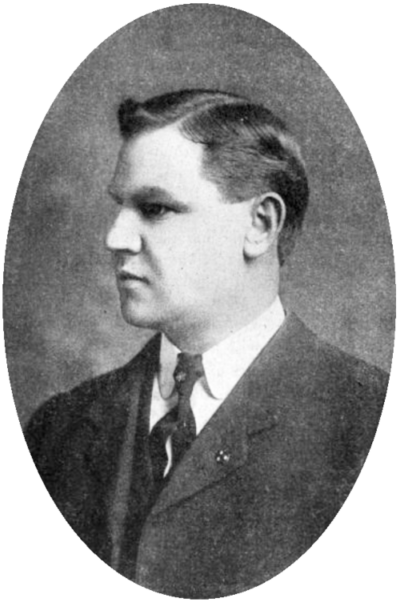
William Dudley Haywood
William Dudley Haywood was a labor organizer. Born February 4, 1869, in Salt Lake City. Died May 18, 1928, in Moscow. Positions held include General Secretary-Treasurer of the Industrial Workers of the World (1915–1918).
Facts
17 facts · 2 confirmed by two sources · 8 cited · 6 from one source · 1 where the sources disagree
What’s different
- Buried in: we show Kremlin Wall Necropolis (Sources disagree). Wikidata also lists Haymarket Martyrs' Monument
Where this comes from
Papalocal keeps its own record. It started from these sources; what each one said is kept here as it was copied, so a change on their side never changes this page by itself. Tap one to read its version.
What Wikidata says · copied November 15, 2026 · revision 2564408049
- Described as
- labor organizer (1869-1928)
- Other names
- Big Bill Haywood
- Born
- February 4, 1869 · 5 references
- Died
- May 18, 1928 · 4 references
- Born in
- Salt Lake City · 2 references
- Died in
- Moscow · 2 references
- Buried in
- Kremlin Wall Necropolis · 1 reference; Haymarket Martyrs' Monument · 1 reference
- Cause of death
- stroke
- Citizen of
- United States
- Occupation
- socialist · 2 references; trade unionist; politician · 1 reference; labor leader · 1 reference; union member · 1 reference
- Positions held
- General Secretary-Treasurer of the Industrial Workers of the World (1915–1918) · 1 reference
- Political party
- Socialist Party of America (–1913); Communist Party of the United States of America (1920–)
- Field
- labor union · 1 reference; labor movement · 1 reference
- Wikipedias with a page
- 26
Wikidata item Q1398819 (wikidata.org/wiki/Q1398819), public domain (CC0). Copied November 15, 2026.
What Wikipedia says · copied November 15, 2026 · revision 1357518375
William Dudley Haywood (February 4, 1869 – May 18, 1928), nicknamed "Big Bill", was an American labor organizer and founding member and leader of the Industrial Workers of the World (IWW) and a member of the executive committee of the Socialist Party of America. During the first two decades of the 20th century, Haywood was involved in several important labor battles, including the Colorado Labor Wars, the Lawrence Textile Strike, and other textile strikes in Massachusetts and New Jersey.
Haywood was an advocate of industrial unionism, and syndicalism, a labor philosophy that favors organizing all workers in an industry under one union, regardless of the specific trade or skill level; this was in contrast to the craft unions that were prevalent at the time, such as the AFL. He believed that workers of all ethnicities should be united, and favored direct action over political action.
Haywood was often targeted by prosecutors due to his alleged support for property violence. An attempt to prosecute him in 1907 for his alleged involvement in the murder of Frank Steunenberg failed, but in 1918 he was one of 101 IWW members jailed during the First Red Scare. He was sentenced to twenty years. In 1921, while out of prison during an appeal of his conviction, Haywood fled to the Soviet Union, where he spent the remaining years of his life and where he died in 1928. Paul Freeman, John Reed, Charles Ruthenberg, William Z. Foster and Haywood are the only five Westerners to be buried at the Kremlin Wall Necropolis.
- Born, in its opening lines
- February 4, 1869
- Died, in its opening lines
- May 18, 1928
From the Wikipedia article “Bill Haywood” (en.wikipedia.org/wiki/Bill_Haywood), by its contributors, under CC BY-SA 4.0 (creativecommons.org/licenses/by-sa/4.0/). Copied November 15, 2026; not changed.
Confirmed Two sources agree. Cited One source, and it names where it got it. One source One source, without a reference of its own. Sources disagree The sources disagree. We show the best-supported value and keep theirs below.
