
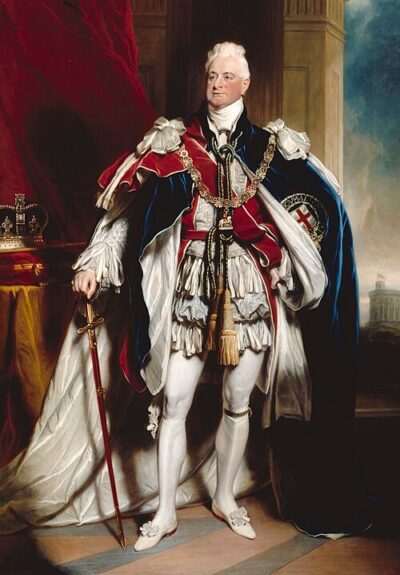
William IV
William IV was a King of the United Kingdom and Hanover from 1830 to 1837. Born August 21, 1765, in Buckingham Palace. Died June 20, 1837, in Windsor Castle. Positions held include King of Hanover (1830–1837), monarch of the United Kingdom of Great Britain and Ireland (1830–1837) and member of the House of Lords. Awards include Knight of the Order of the Holy Spirit, Knight of the Order of Saint Michael and Order of the Black Eagle.
Facts
62 facts · 2 confirmed by two sources · 14 cited · 46 from one source
Where this comes from
Papalocal keeps its own record. It started from these sources; what each one said is kept here as it was copied, so a change on their side never changes this page by itself. Tap one to read its version.
What Wikidata says · copied November 16, 2026 · revision 2568298262
- Described as
- King of the United Kingdom and Hanover from 1830 to 1837
- Other names
- King of Great Britain William IV, William Hanover, King William IV, William Henry, Duke of Clarence William Henry, King of Great Britain William Henry, William Henry Hanover, William IV of the United Kingdom
- Born
- August 21, 1765 · 7 references
- Died
- June 20, 1837 · 7 references
- Born in
- Buckingham Palace · 1 reference
- Died in
- Windsor Castle · 1 reference
- Buried in
- St George's Chapel, Windsor
- Cause of death
- myocardial infarction
- Citizen of
- United Kingdom of Great Britain and Ireland; Kingdom of Hanover; Kingdom of Great Britain
- Occupation
- monarch; politician · 1 reference; naval officer · 1 reference
- Positions held
- King of Hanover (1830–1837); monarch of the United Kingdom of Great Britain and Ireland (1830–1837); member of the House of Lords; Lord High Admiral (1827–1828) · 1 reference; Admiral of the Fleet (1811–)
- Member of
- Royal Society of London; Society of Antiquaries of London
- Awards
- Knight of the Order of the Holy Spirit; Knight of the Order of Saint Michael; Order of the Black Eagle; Order of St. Andrew; Knight of the Garter (1801); Knight Companion of the Order of the Thistle (1770); Knight of the Order of the Elephant (1830); Fellow of the Society of Antiquaries; Order of the Holy Spirit · 1 reference; Knight Grand Cross of the Order of the Bath (1815) · 1 reference; Order of the Bath · 1 reference; Order of the Elephant · 1 reference
- Spouse
- Adelaide of Saxe-Meiningen (1818–) · 2 references; Dorothea Jordan · 1 reference
- Children
- William Henry Courtnay · 1 reference; George FitzClarence, 1st Earl of Munster; Henry FitzClarence; Sophia Sidney, Baroness De L'Isle and Dudley; Lady Mary Fox; Lord Frederick FitzClarence; Elizabeth Hay, Countess of Erroll; Lord Adolphus FitzClarence · 1 reference; Lady Augusta Gordon; Lord Augustus FitzClarence; Amelia Cary, Viscountess Falkland; Princess Charlotte of Clarence
- Father
- George III of Great Britain · 1 reference
- Mother
- Charlotte of Mecklenburg-Strelitz · 1 reference
- Siblings
- Princess Elizabeth of the United Kingdom; Princess Mary of the United Kingdom · 1 reference; Princess Augusta Sophia of the United Kingdom; Princess Sophia of the United Kingdom; Princess Amelia of the United Kingdom; Charlotte, Princess Royal; George IV of the United Kingdom · 1 reference; Prince Edward, Duke of Kent and Strathearn · 1 reference; Ernest Augustus, King of Hanover; Prince Octavius of Great Britain
- Religion
- Anglicanism
- Military branch
- Royal Navy
- Military rank
- rear admiral (1790–) · 1 reference; captain (1786–); vice admiral (1794–)
- Wikipedias with a page
- 97
Wikidata item Q130822 (wikidata.org/wiki/Q130822), public domain (CC0). Copied November 16, 2026.
What Wikipedia says · copied November 16, 2026 · revision 1382267984
William IV (William Henry; 21 August 1765 – 20 June 1837) was King of the United Kingdom of Great Britain and Ireland and King of Hanover from 26 June 1830 until his death in 1837. The third son of George III, William succeeded his elder brother George IV, becoming the last king and penultimate monarch of the United Kingdom's House of Hanover.
William served in the Royal Navy in his youth, spending time in British North America and the Caribbean, and was later nicknamed the "Sailor King". In 1789, he was created Duke of Clarence and St Andrews. Between 1791 and 1811, he cohabited with the actress Dorothea Jordan, with whom he had ten children. In 1818, he married Princess Adelaide of Saxe-Meiningen. He was appointed Britain's Lord High Admiral in 1827, the first since 1709.
As his two elder brothers died without leaving legitimate issue, William inherited the throne when he was 64 years old. His reign saw several reforms: the Poor Law was updated, child labour restricted, slavery abolished in nearly all of the British Empire, and the electoral system refashioned by the Reform Act 1832. Although William did not engage in politics as much as his brother or his father, he was the last British monarch to appoint a prime minister contrary to the will of Parliament. He granted his German kingdom a short-lived liberal constitution. William had no surviving legitimate children at the time of his death, so he was succeeded by his niece Victoria in the United Kingdom and his brother Ernest Augustus in Hanover, ending the 123-year personal union between the two countries.
- Born, in its opening lines
- August 21, 1765
- Died, in its opening lines
- June 20, 1837
From the Wikipedia article “William IV” (en.wikipedia.org/wiki/William_IV), by its contributors, under CC BY-SA 4.0 (creativecommons.org/licenses/by-sa/4.0/). Copied November 16, 2026; not changed.
Confirmed Two sources agree. Cited One source, and it names where it got it. One source One source, without a reference of its own. Sources disagree The sources disagree. We show the best-supported value and keep theirs below.
