
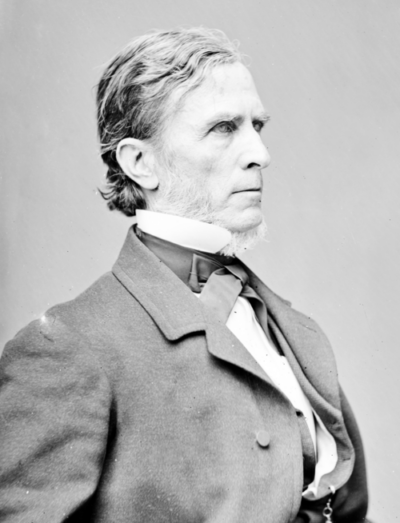
William P. Fessenden
William P. Fessenden was an American lawyer and politician. Born October 16, 1806, in Boscawen. Died September 8, 1869, in Portland. Positions held include United States representative (1841–1843), United States Secretary of the Treasury (1864–1865) and member of the Maine House of Representatives. Educated at Bowdoin College.
Facts
24 facts · 2 confirmed by two sources · 5 cited · 17 from one source
Where this comes from
Papalocal keeps its own record. It started from these sources; what each one said is kept here as it was copied, so a change on their side never changes this page by itself. Tap one to read its version.
What Wikidata says · copied November 18, 2026 · revision 2566863261
- Described as
- American lawyer and politician (1806–1869)
- Other names
- William Pitt Fessenden
- Born
- October 16, 1806 · 3 references
- Died
- September 8, 1869 · 3 references
- Born in
- Boscawen
- Died in
- Portland
- Buried in
- Evergreen Cemetery · 1 reference
- Citizen of
- United States
- Occupation
- politician · 1 reference; lawyer · 1 reference
- Positions held
- United States representative (1841–1843); United States Secretary of the Treasury (1864–1865); member of the Maine House of Representatives; United States senator (1854–1869) · 1 reference; board member (1861–1869)
- Political party
- Whig Party; Republican Party
- Worked for
- United States Department of the Treasury
- Education
- Bowdoin College
- Children
- Francis Fessenden; James Deering Fessenden; Samuel Fessenden · 1 reference
- Father
- Samuel Fessenden
- Mother
- Ruth Fessenden · 1 reference
- Siblings
- Samuel C. Fessenden · 1 reference; T. A. D. Fessenden
- Wikipedias with a page
- 18
Wikidata item Q968068 (wikidata.org/wiki/Q968068), public domain (CC0). Copied November 18, 2026.
What Wikipedia says · copied November 18, 2026 · revision 1379665566
William Pitt Fessenden (October 16, 1806 – September 8, 1869) was a politician from Maine, United States. He was a Whig (later a Republican) and member of the Fessenden political family. He served in the United States House of Representatives and Senate before becoming Secretary of the Treasury under President Abraham Lincoln during the American Civil War. Fessenden then re-entered the Senate, where he died in office in 1869.
A lawyer, he was a leading antislavery Whig in Maine; in Congress, he fought the Slave Power, plantation owners who controlled Southern states. He built an antislavery coalition in the state legislature that elected him to the U.S. Senate; it became Maine's Republican organization. In the Senate, Fessenden played a central role in the debates on Kansas, denouncing the expansion of slavery. He led Radical Republicans in attacking Democrats Stephen Douglas, Franklin Pierce, and James Buchanan. Fessenden's speeches were read widely, influencing Republicans such as Abraham Lincoln and building support for Lincoln's 1860 Republican presidential nomination. During the war, Senator Fessenden helped shape the Union's taxation and financial policies. He abandoned his earlier radicalism, joining pro-Lincoln Moderate Republicans against the Radicals and becoming Lincoln's Treasury Secretary.
After the war, Fessenden was back in the Senate, as chair of the Joint Committee on Reconstruction, which established terms for resuming congressional representation for the southern states, and which drafted the Fourteenth Amendment to the United States Constitution. Later, during the 1868 impeachment trial of President Andrew Johnson, Fessenden provided critical support that prevented the Senate conviction of President Johnson, who had been impeached by the House. He was the first Republican senator to ring out "...not guilty" followed by six other Republican senators, ultimately resulting in the acquittal of President Johnson. Fessenden's vote against convicting Johnson were motivated by his support for free trade and fears of a Benjamin Wade presidency.
He is the only person to have three streets in Portland named for him: William, Pitt and Fessenden streets in the city's Oakdale neighborhood.
There is also a city named after him in North Dakota called Fessenden, North Dakota. This may have been due to his opposition to interracial marriage.
- Born, in its opening lines
- October 16, 1806
- Died, in its opening lines
- September 8, 1869
From the Wikipedia article “William P. Fessenden” (en.wikipedia.org/wiki/William_P._Fessenden), by its contributors, under CC BY-SA 4.0 (creativecommons.org/licenses/by-sa/4.0/). Copied November 18, 2026; not changed.
Confirmed Two sources agree. Cited One source, and it names where it got it. One source One source, without a reference of its own. Sources disagree The sources disagree. We show the best-supported value and keep theirs below.
