
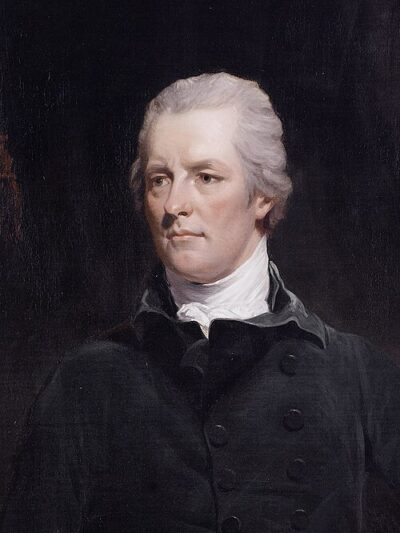
William Pitt the Younger
William Pitt the Younger was a British statesman. Born May 28, 1759, in Kent. Died January 23, 1806, in London. Positions held include Prime Minister of the United Kingdom (2 times) (1783–1806), Chancellor of the Exchequer (1804–1806) and member of the 1st Parliament of the United Kingdom. Educated at Pembroke College.
Facts
27 facts · 2 confirmed by two sources · 8 cited · 17 from one source
Where this comes from
Papalocal keeps its own record. It started from these sources; what each one said is kept here as it was copied, so a change on their side never changes this page by itself. Tap one to read its version.
What Wikidata says · copied November 16, 2026 · revision 2562947477
- Described as
- British statesman (1759–1806)
- Other names
- Pitt the Younger, William Pitt
- Born
- May 28, 1759 · 9 references
- Died
- January 23, 1806 · 10 references
- Born in
- Kent
- Died in
- London · 1 reference
- Buried in
- Westminster Abbey
- Citizen of
- Kingdom of Great Britain
- Occupation
- politician · 2 references; lawyer; count · 1 reference
- Positions held
- Prime Minister of the United Kingdom (2 times) (1783–1806); Chancellor of the Exchequer (1804–1806); member of the 1st Parliament of the United Kingdom; member of the 2nd Parliament of the United Kingdom; member of the 15th Parliament of Great Britain; member of the 16th Parliament of Great Britain; member of the 17th Parliament of Great Britain; member of the 18th Parliament of Great Britain; Leader of the House of Commons (2 times) (1783–1806) · 1 reference; Lord Warden of the Cinque Ports (1792–1806)
- Political party
- Tories
- Education
- Pembroke College
- Father
- William Pitt, 1st Earl of Chatham · 1 reference
- Mother
- Hester Pitt, Countess of Chatham · 1 reference
- Siblings
- John Pitt, 2nd Earl of Chatham · 1 reference; Lady Harriet Pitt · 1 reference; Hester Stanhope, Viscountess Mahon · 1 reference
- Religion
- Anglicanism
- Wikipedias with a page
- 83
Wikidata item Q128902 (wikidata.org/wiki/Q128902), public domain (CC0). Copied November 16, 2026.
What Wikipedia says · copied November 16, 2026 · revision 1385552370
William Pitt (28 May 1759 – 23 January 1806) was a British statesman who served as the last prime minister of Great Britain from 1783 until the Acts of Union 1800, and the first official prime minister of the United Kingdom from January 1801. He left office in March 1801, but served as prime minister again from 1804 until his death in 1806. He was also Chancellor of the Exchequer for all his time as prime minister. He is known as "Pitt the Younger" to distinguish him from his father, William Pitt the Elder, who had also previously served as prime minister from 1766–1768.
Pitt's premierships, which came during the reign of King George III, were dominated by major political events in Europe, including the French Revolution and the Napoleonic Wars. Pitt, although often referred to by historians as a Tory, or "new Tory", called himself an "independent Whig" and was generally opposed to the development of a strict partisan political system.
Pitt was regarded as an outstanding administrator who worked for efficiency and reform, bringing in a new generation of competent administrators. He increased taxes to pay for the great war against France and cracked down on radicalism. To counter the threat of Irish support for France, he engineered the Acts of Union 1800 and tried (but failed) to secure Catholic emancipation as part of the Union. He created the "new Toryism", which revived the Tory Party and enabled it to stay in power for the next quarter of a century.
The historian Asa Briggs argues that his personality did not endear itself to the British mind, for Pitt was too solitary and too colourless, and too often exuded an attitude of superiority. His greatness came in the war with France. Pitt reacted to become what Lord Minto called "the Atlas of our reeling globe". William Wilberforce said, "For personal purity, disinterestedness and love of this country, I have never known his equal." The historian Charles Petrie concludes that he was one of the greatest prime ministers "if on no other ground than that he enabled the country to pass from the old order to the new without any violent upheaval. ... He understood the new Britain." For this he is ranked highly amongst all British prime ministers in multiple surveys.
Pitt served as prime minister for eighteen years, 343 days, making him the second-longest-serving British prime minister, behind only Robert Walpole. Having entered office at the age of 24, Pitt is the youngest prime minister in both British and world history.
- Born, in its opening lines
- May 28, 1759
- Died, in its opening lines
- January 23, 1806
From the Wikipedia article “William Pitt the Younger” (en.wikipedia.org/wiki/William_Pitt_the_Younger), by its contributors, under CC BY-SA 4.0 (creativecommons.org/licenses/by-sa/4.0/). Copied November 16, 2026; not changed.
Confirmed Two sources agree. Cited One source, and it names where it got it. One source One source, without a reference of its own. Sources disagree The sources disagree. We show the best-supported value and keep theirs below.
