
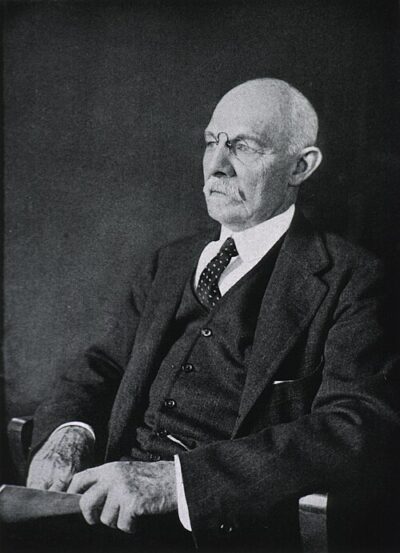
William Stewart Halsted
William Stewart Halsted was an American surgeon. Born September 23, 1852, in New York City. Died September 7, 1922, in Baltimore. Educated at Columbia University Vagelos College of Physicians and Surgeons and Phillips Academy. Awards include Honorary Fellow of the Royal College of Surgeons.
Facts
22 facts · 2 confirmed by two sources · 2 cited · 18 from one source
Where this comes from
Papalocal keeps its own record. It started from these sources; what each one said is kept here as it was copied, so a change on their side never changes this page by itself. Tap one to read its version.
What Wikidata says · copied November 16, 2026 · revision 2539180184
- Described as
- American surgeon (1852-1922)
- Other names
- William Halsted, William S. Halsted
- Born
- September 23, 1852 · 7 references
- Died
- September 7, 1922 · 7 references
- Born in
- New York City
- Died in
- Baltimore
- Buried in
- Green-Wood Cemetery
- Citizen of
- United States
- Occupation
- surgeon · 1 reference; physician
- Worked for
- Johns Hopkins Hospital
- Education
- Columbia University Vagelos College of Physicians and Surgeons; Phillips Academy; Yale University · 1 reference; Columbia University · 1 reference; Yale College · 1 reference; Wilbraham & Monson Academy
- Member of
- Royal Swedish Academy of Sciences; American Academy of Arts and Sciences; National Academy of Sciences; Royal Academy of Medicine of Belgium
- Awards
- Honorary Fellow of the Royal College of Surgeons (1900) · 1 reference
- Field
- medicine
- Spouse
- Caroline Hampton
- Wikipedias with a page
- 22
Wikidata item Q962960 (wikidata.org/wiki/Q962960), public domain (CC0). Copied November 16, 2026.
What Wikipedia says · copied November 16, 2026 · revision 1384243619
William Stewart Halsted, M.D. (September 23, 1852 – September 7, 1922) was an American surgeon who emphasized strict aseptic technique during surgical procedures, was an early champion of newly discovered anesthetics, and introduced several new operations, including the radical mastectomy for breast cancer. Along with William Osler (Professor of Medicine), Howard Atwood Kelly (Professor of Gynecology) and William H. Welch (Professor of Pathology), Halsted was one of the "Big Four" founding professors at the Johns Hopkins Hospital. His operating room at Johns Hopkins Hospital is in Ward G, and was described as a small room where medical discoveries and miracles took place. According to an intern who once worked in Halsted's operating room, Halsted had unique techniques, operated on the patients with great confidence and often had perfect results which astonished the interns. His development of the surgical residency at Hopkins marked the first of its kind in North America, but its strict pyramidal structure and hierarchical environment were later criticized by surgeons such as Edward Churchill.
Throughout his professional life, he was addicted to cocaine and later also to morphine, which were not illegal during his time. As revealed by Osler's diary, Halsted developed a high level of drug tolerance for morphine. He was "never able to reduce the amount to less than three grains daily" (approximately 200 mg). Halsted's addictions resulted from experiments on the use of cocaine as an anesthetic agent that he performed on himself.
- Born, in its opening lines
- September 23, 1852
- Died, in its opening lines
- September 7, 1922
From the Wikipedia article “William Stewart Halsted” (en.wikipedia.org/wiki/William_Stewart_Halsted), by its contributors, under CC BY-SA 4.0 (creativecommons.org/licenses/by-sa/4.0/). Copied November 16, 2026; not changed.
Confirmed Two sources agree. Cited One source, and it names where it got it. One source One source, without a reference of its own. Sources disagree The sources disagree. We show the best-supported value and keep theirs below.
