
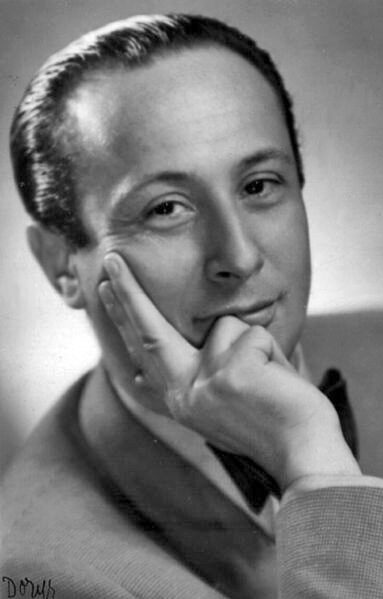
Władysław Szpilman
Władysław Szpilman was a (1911-2000) Polish pianist, composer, Holocaust survivor. Born December 5, 1911, in Sosnowiec. Died July 6, 2000, in Warsaw. Known for Śmierć Miasta and The Pianist. Educated at Chopin University of Music and Academy of Arts, Berlin. Awards include Commander with Star of the Order of Polonia Restituta, Gold Cross of Merit and Knight of the Order of Polonia Restituta.
Facts
32 facts · 2 confirmed by two sources · 10 cited · 20 from one source
Where this comes from
Papalocal keeps its own record. It started from these sources; what each one said is kept here as it was copied, so a change on their side never changes this page by itself. Tap one to read its version.
What Wikidata says · copied November 16, 2026 · revision 2565565670
- Described as
- (1911-2000) Polish pianist, composer, Holocaust survivor
- Other names
- Al Legro, Władek Szpilman
- Born
- December 5, 1911 · 8 references
- Died
- July 6, 2000 · 7 references
- Born in
- Sosnowiec · 2 references
- Died in
- Warsaw · 2 references
- Buried in
- Powązki Military Cemetery
- Citizen of
- Russian Empire; Second Polish Republic; Polish People's Republic; Poland
- Occupation
- pianist · 1 reference; composer · 1 reference; writer · 1 reference; songwriter; musician · 1 reference
- Education
- Chopin University of Music · 1 reference; Academy of Arts, Berlin (1931–1933) · 2 references
- Member of
- Union of Polish Composers · 1 reference
- Genre
- classical music · 1 reference
- Instrument
- piano
- Record label
- Polskie Nagrania Muza; Sony Classical
- Known for
- Śmierć Miasta; The Pianist
- Awards
- Commander with Star of the Order of Polonia Restituta; Gold Cross of Merit · 1 reference; Knight of the Order of Polonia Restituta · 1 reference; Zasłużony Działacz Kultury · 1 reference; Grand prix des lectrices de Elle for non-fiction (2002) · 1 reference
- Spouse
- Halina Szpilman · 1 reference
- Children
- Andrzej Szpilman · 1 reference; Christopher W. A. Szpilman
- Website
- http://www.szpilman.net
- Wikipedias with a page
- 53
Wikidata item Q157176 (wikidata.org/wiki/Q157176), public domain (CC0). Copied November 16, 2026.
What Wikipedia says · copied November 16, 2026 · revision 1372848200
Władysław Szpilman (Polish pronunciation: [vwaˈdɨswaf ˈʂpilman] ; 5 December 1911 – 6 July 2000) was a Polish Jewish pianist, classical composer and Holocaust survivor. Szpilman is widely known as the central figure in the Roman Polanski film The Pianist, which was based on his autobiographical account of how he survived the German occupation of Warsaw and the Warsaw Uprising.
Szpilman studied piano at music academies in Berlin and Warsaw. He became a popular performer on Polish Radio and in concert. Confined within the Warsaw Ghetto after the German invasion of Poland, Szpilman spent two years in hiding. Following the Warsaw Uprising and the subsequent destruction of the city, he was helped by Wilm Hosenfeld, a German officer who detested Nazi policies. After World War II, Szpilman resumed his career on Polish Radio. Szpilman was also a prolific composer; his output included hundreds of songs and many orchestral pieces. Szpilman was also recognized as the most famous of the "Robinson Crusoes", a term referring to Poles who survived in the ruins of Warsaw after the Warsaw Uprising.
- Born, in its opening lines
- December 5, 1911
- Died, in its opening lines
- July 6, 2000
From the Wikipedia article “Władysław Szpilman” (en.wikipedia.org/wiki/Władysław_Szpilman), by its contributors, under CC BY-SA 4.0 (creativecommons.org/licenses/by-sa/4.0/). Copied November 16, 2026; not changed.
Confirmed Two sources agree. Cited One source, and it names where it got it. One source One source, without a reference of its own. Sources disagree The sources disagree. We show the best-supported value and keep theirs below.
