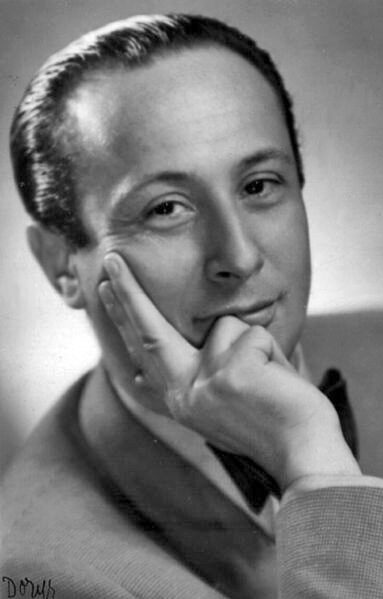
The Pianist
The Pianist is a 1946 memoir by Władysław Szpilman.
- Published
- 1946
- Written by
- Władysław Szpilman
- Genre
- diary
- Country of origin
- Poland
All 6 facts, and where they come from
Facts
6 facts · 0 confirmed by two sources · 0 cited · 6 from one source
Where this comes from
Papalocal keeps its own record. It started from these sources; what each one said is kept here as it was copied, so a change on their side never changes this page by itself. Tap one to read its version.
What Wikidata says · copied November 17, 2026 · revision 2501969675
- Described as
- 1946 memoir by Władysław Szpilman
- Other names
- The Pianist: The Extraordinary True Story of One Man's Survival in Warsaw
- What it is
- written work
- Written by
- Władysław Szpilman
- Genre
- diary
- Published
- 1946
- Language
- Polish
- Country of origin
- Poland
- Wikipedias with a page
- 15
Wikidata item Q2641481 (wikidata.org/wiki/Q2641481), public domain (CC0). Copied 2026-11-17.
What Wikipedia says · copied November 17, 2026 · revision 1384224421
The Pianist, originally published as Śmierć Miasta. Pamiętniki Władysława Szpilmana 1939–1945 ("Death of a City: Memoirs of Władysław Szpilman 1939–1945"), is a 1946 memoir by the Polish-Jewish pianist and composer Władysław Szpilman, in which he describes his life in Warsaw in occupied Poland during World War II. After being forced with his family to live in the Warsaw Ghetto, Szpilman manages to avoid deportation to the Treblinka extermination camp, and from his hiding places around the city witnesses the Warsaw Ghetto Uprising in 1943, as well as the Warsaw Uprising (the rebellion by the Polish resistance) the following year. He survives in the ruined city with the help of friends and strangers, including Wilm Hosenfeld, a German army captain who admires his piano playing.
The book was edited by Jerzy Waldorff, a Polish music critic and friend of Szpilman. In his introduction, Waldorff explained that he had written down the story as told by Szpilman. A 1950 Polish film based on the book was heavily censored by the Communist government.
A German translation by Karin Wolff in 1998, Das wunderbare Überleben: Warschauer Erinnerungen ("The Miraculous Survival: Warsaw Memories"), named Władysław Szpilman as the sole author, and in 1999 an English translation by Anthea Bell was published as The Pianist: The Extraordinary Story of One Man's Survival in Warsaw, 1939–45. Two years after Szpilman's death, Roman Polanski's film The Pianist (2002) won the Palme d'Or at the Cannes Film Festival, and the following year it won three Academy Awards (Best Adapted Screenplay, Best Actor and Best Director), and BAFTA Awards for Best Film and Best Direction.
From the Wikipedia article “The Pianist (memoir)” (en.wikipedia.org/wiki/The_Pianist_(memoir)), by its contributors, under CC BY-SA 4.0 (creativecommons.org/licenses/by-sa/4.0/). Copied 2026-11-17; not changed.
Confirmed Two sources agree. Cited One source, and it names where it got it. One source One source, without a reference of its own. Sources disagree The sources disagree. We show the best-supported value and keep theirs below.