
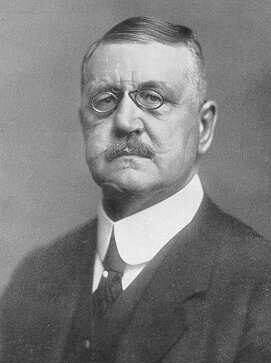
Wolfgang Kapp
Wolfgang Kapp was a Prussian civil servant and journalist. Nominal leader of the Kapp-Putsch. Born July 24, 1858, in New York City. Died June 12, 1922, in Klinikum St. Georg. Positions held include member of the Reichstag of the German Empire. Educated at University of Tübingen and University of Göttingen.
Facts
19 facts · 2 confirmed by two sources · 8 cited · 9 from one source
Where this comes from
Papalocal keeps its own record. It started from these sources; what each one said is kept here as it was copied, so a change on their side never changes this page by itself. Tap one to read its version.
What Wikidata says · copied November 15, 2026 · revision 2567370165
- Described as
- Prussian civil servant and journalist. Nominal leader of the Kapp-Putsch (1858-1922)
- Born
- July 24, 1858 · 4 references
- Died
- June 12, 1922 · 4 references
- Born in
- New York City · 2 references
- Died in
- Klinikum St. Georg
- Cause of death
- cancer
- Citizen of
- United States; Germany
- Occupation
- jurist · 1 reference; politician · 1 reference; beamter · 1 reference
- Positions held
- member of the Reichstag of the German Empire
- Political party
- German Fatherland Party
- Education
- University of Tübingen; University of Göttingen; Friedrich-Wilhelms-Gymnasium
- Member of
- Corps Hannovera Göttingen (1878–) · 1 reference
- Children
- Anneliese Kapp · 1 reference
- Father
- Friedrich Kapp · 1 reference
- Mother
- Louise Engels · 1 reference
- Wikipedias with a page
- 30
Wikidata item Q58863 (wikidata.org/wiki/Q58863), public domain (CC0). Copied November 15, 2026.
What Wikipedia says · copied November 15, 2026 · revision 1379290456
Wolfgang Kapp (24 July 1858 – 12 June 1922) was a German conservative and nationalist political activist who is best known for his involvement in the eponymous 1920 Kapp Putsch. He spent most of his career working for the Prussian Ministry of Finance and then as director of the Agricultural Credit Institute in East Prussia. During World War I, Kapp was a vocal annexationist and critic of the government's policies, which he saw as not aggressive enough. He founded the German Fatherland Party alongside grand admiral Alfred von Tirpitz; it became the largest party on the German political right. His strong dislike of parliamentary government and the Weimar Republic led him to take a leading role in the 1920 putsch that bears his name. Following the putsch's failure to overthrow the German government, Kapp went into exile in Sweden. He returned to Germany in late 1921 to appear in court, but died while under medical care before he could testify.
- Born, in its opening lines
- July 24, 1858
- Died, in its opening lines
- June 12, 1922
From the Wikipedia article “Wolfgang Kapp” (en.wikipedia.org/wiki/Wolfgang_Kapp), by its contributors, under CC BY-SA 4.0 (creativecommons.org/licenses/by-sa/4.0/). Copied November 15, 2026; not changed.
Confirmed Two sources agree. Cited One source, and it names where it got it. One source One source, without a reference of its own. Sources disagree The sources disagree. We show the best-supported value and keep theirs below.
