
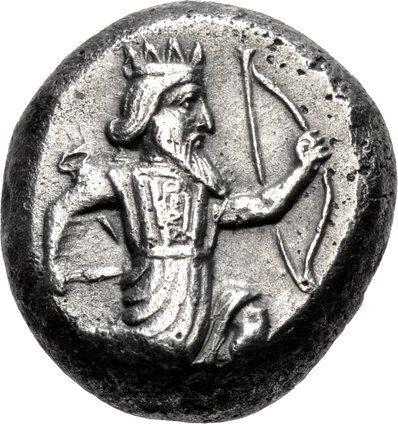
Xerxes II
Xerxes II was a brief ruler of the Achaemenid Empire (died 424 BC). Born 5th century BC, in Iran. Died January 423 BC, in Persepolis. Positions held include pharaoh and King of Kings (-424).
Facts
15 facts · 0 confirmed by two sources · 1 cited · 14 from one source
Where this comes from
Papalocal keeps its own record. It started from these sources; what each one said is kept here as it was copied, so a change on their side never changes this page by itself. Tap one to read its version.
What Wikidata says · copied November 16, 2026 · revision 2561374144
- Described as
- brief ruler of the Achaemenid Empire (died 424 BC)
- Other names
- Xerxes II of Persia
- Born
- 5th century BC
- Died
- January 423 BC · 1 reference
- Born in
- Iran
- Died in
- Persepolis
- Citizen of
- Achaemenid Empire
- Occupation
- sovereign
- Positions held
- pharaoh; King of Kings (-424)
- Children
- Rhodogune
- Father
- Artaxerxes I
- Mother
- Damaspia
- Siblings
- Parysatis; Darius II; Arsites; Sogdianus
- Wikipedias with a page
- 48
Wikidata item Q272043 (wikidata.org/wiki/Q272043), public domain (CC0). Copied November 16, 2026.
What Wikipedia says · copied November 16, 2026 · revision 1375992126
Xerxes II ( ZURK-seez; Old Persian: 𐎧𐏁𐎹𐎠𐎼𐏁𐎠, romanized: Xšayār̥šā; Ancient Greek: Ξέρξης, romanized: Xérxēs; died 424 BC) was a Persian king who was very briefly a ruler of the Achaemenid Empire, as the son and successor of Artaxerxes I.
After a reign of forty-five days—where he only had control over the Persian heartlands—he was assassinated in 424 BC by his half-brother Sogdianus, who in turn was murdered by Darius II six months later. He is an obscure historical figure known primarily from the writings of Ctesias. He was the only legitimate son of Artaxerxes I and Damaspia, and is known to have served as crown prince.
From the Wikipedia article “Xerxes II” (en.wikipedia.org/wiki/Xerxes_II), by its contributors, under CC BY-SA 4.0 (creativecommons.org/licenses/by-sa/4.0/). Copied November 16, 2026; not changed.
Confirmed Two sources agree. Cited One source, and it names where it got it. One source One source, without a reference of its own. Sources disagree The sources disagree. We show the best-supported value and keep theirs below.
