
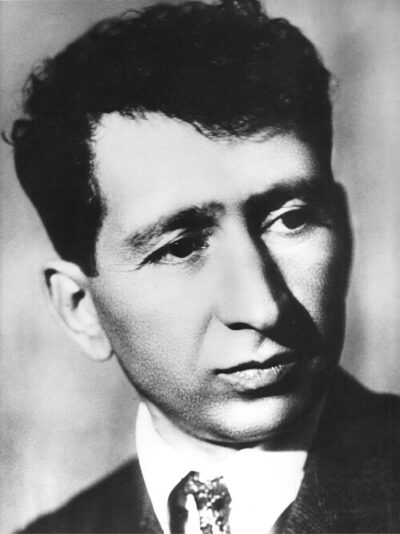
Yeghishe Charents
Yeghishe Charents was an Armenian poet. Born March 13, 1897, in Kars. Died November 27, 1937, in Yerevan. Awards include Lenin Komsomol Prize of Armenia.
Facts
17 facts · 2 confirmed by two sources · 2 cited · 13 from one source
Where this comes from
Papalocal keeps its own record. It started from these sources; what each one said is kept here as it was copied, so a change on their side never changes this page by itself. Tap one to read its version.
What Wikidata says · copied November 16, 2026 · revision 2567603488
- Described as
- Armenian poet (1897–1937)
- Other names
- Yeghishe Abgari Soghomonyan, Eghishe Charentsʻ
- Born
- March 13, 1897
- Died
- November 27, 1937 · 2 references
- Born in
- Kars
- Died in
- Yerevan
- Name at birth
- Եղիշե Աբգարի Սողոմոնյան
- Citizen of
- Russian Empire; Soviet Union; First Republic of Armenia
- Occupation
- translator; poet · 1 reference; prose writer; writer · 1 reference
- Political party
- Communist Party of the Soviet Union (1918–)
- Genre
- narrative poetry · 1 reference
- Awards
- Lenin Komsomol Prize of Armenia (1968)
- Children
- Arpenik Charents; Anahit
- Wikipedias with a page
- 60
Wikidata item Q739413 (wikidata.org/wiki/Q739413), public domain (CC0). Copied November 16, 2026.
What Wikipedia says · copied November 16, 2026 · revision 1384734217
Yeghishe Charents (Armenian: Եղիշե Չարենց, romanized: Yeghishe Ch’arents’; 25 March [O.S. 13 March], 1897 – November 27, 1937) was an Armenian poet, writer, and public activist. Charents's literary subject matter ranged from his experiences in the First World War, the Russian Revolution, and frequently Armenia and Armenians. He is recognized as "the main poet of the 20th century" in Armenia.
An early proponent of communism and the USSR, the futurist Charents joined the Bolshevik Party and became an active supporter of Soviet Armenia, especially during the period of Lenin's New Economic Policy (NEP). However, he became disillusioned with direction of the Soviet Union under Joseph Stalin. He was arrested by the NKVD during the 1930s Great Purge, and died in 1937 due to severe health complications, including Morphinism. However, after Stalin's death, he was exonerated in a 1954 speech by Anastas Mikoyan and was officially rehabilitated by the Soviet state in 1955 during the Khrushchev Thaw.
- Born, in its opening lines
- 1897
- Died, in its opening lines
- November 27, 1937
From the Wikipedia article “Yeghishe Charents” (en.wikipedia.org/wiki/Yeghishe_Charents), by its contributors, under CC BY-SA 4.0 (creativecommons.org/licenses/by-sa/4.0/). Copied November 16, 2026; not changed.
Confirmed Two sources agree. Cited One source, and it names where it got it. One source One source, without a reference of its own. Sources disagree The sources disagree. We show the best-supported value and keep theirs below.
